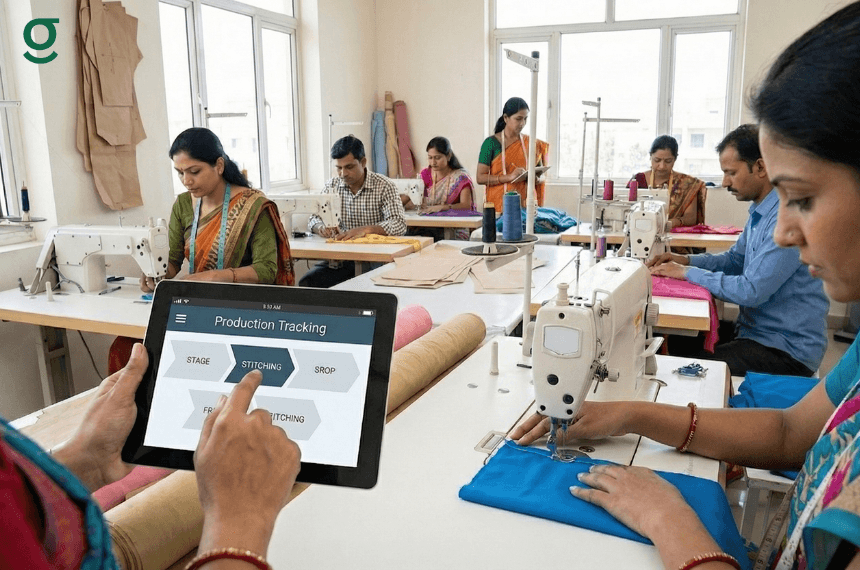
How can boutique shops manage workflow efficiently without knowing if an order is currently in cutting, stitching, or finishing?
Running a boutique or tailoring unit often feels like a constant race against time. Orders are scattered across diaries or WhatsApp, and knowing the exact status of a customer's blouse or suit usually requires shouting across the shop floor. Is it cut? Is the Masterji stitching it? Is it stuck in hemming?
Implementing a dedicated tailoring application transforms this chaos into clarity. By digitizing the production workflow, you move from assumptions to actual data, ensuring you know exactly where every order stands.
Here is how moving to a digital system optimizes your production flow.
The "Interrupt Effect": Why Verbal Checks Slow Down Production
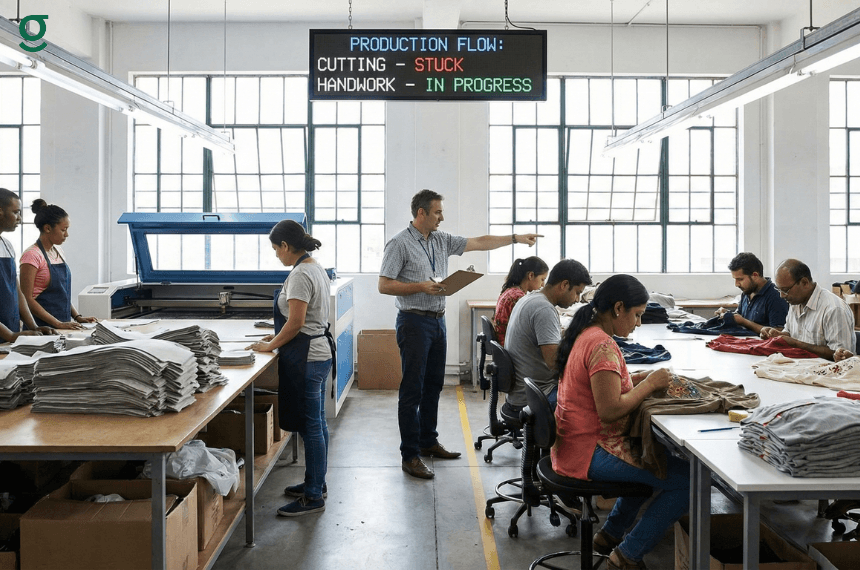
In a traditional setup, the only way to find the status of an order is to ask someone. This leads to the "Interrupt Effect." Every time a boutique owner asks a Masterji or Karigar, "Is Mrs. Sharma's blouse ready?", work stops.
- The Cost of Distraction: The tailor stops stitching to check the pile. Focus is broken.
- The Information Lag: If the item is with the finishing team, the tailor has to get up, walk over, check, and report back.
- The Memory Trap: Reliance on memory leads to errors. A Masterji might say "It will be done by evening" based on a guess, leading to broken promises.
This manual loop of checking and reporting is the biggest hidden cost in a boutique's productivity. A tailoring application eliminates this entirely. The status is updated on the system as the work moves, meaning the owner can check the dashboard without interrupting a single stitch.

The Digital Job Card: A Live View of Every Garment
Paper job cards get lost, oil-stained, or buried under fabric piles. A tailoring application introduces the concept of a Digital Job Card that travels with the order through every stage of production.
GrowStitch is designed specifically for these workflows, replacing vague statuses with real production milestones. Instead of a generic "In Progress," you see exactly where the garment is in the lifecycle:
- Cutting Stage: Confirming measurements and fabric cutting.
- Stitching Progress: Tracking the assembly by the tailor.
- Finishing & QC: Monitoring hemming, buttoning, and final checks.
- Ready for Delivery: Automated alerts when the garment is packed .
This level of detail ensures that "work in progress" actually means work is progressing, not just sitting in a pile.
Spotting Bottlenecks: Is It Stuck in Cutting or Handwork?

Delivery delays rarely happen "suddenly." They accumulate over days because work gets stuck at a specific stage without anyone noticing until the delivery date arrives.
Without tailoring software, you might know that 10 orders are pending. With GrowStitch, you know why they are pending.
- Cutting Overload: If 15 orders are stuck in the "Cutting" stage, you know your Masterji is the bottleneck.
- Finishing Delays: If stitching is done but orders are piling up in "Finishing," you might need to hire temporary help for handwork or hemming.
This insight allows for proactive correction. You can identify delay patterns and reallocate resources before a customer calls to complain. It transforms you from a firefighter solving crises to a manager controlling the flow.
Assigning Accountability: Who Has the Ball?
One of the hardest parts of managing a tailoring unit is accountability. When a mistake happens or a deadline is missed, it is often difficult to pinpoint who was responsible.
A tailoring application assigns accountability naturally.
- Staff Tracking: You can see which staff member handled the cutting or stitching for a specific order.
- Performance Clarity: It becomes easy to see which Karigar clears their queue fastest and who struggles with delays.
- Reduced Blame Games: Since the system tracks the movement, there is no ambiguity about where an order was held up.
This fosters a culture of ownership. When staff know their work is visible on the online tailor app, they take greater responsibility for their specific stage of production.
From "I'll Check and Tell You" to "It's Currently in Finishing"
The ultimate test of a tailoring application is the customer experience. When a customer calls to ask about their order, the difference between a manual shop and a digital boutique is stark.
The Old Way:
"One second ma'am, let me check with Masterji... (holds line)... (shouts to staff)... (wait time)... Ma'am, he says he will start it today."
The GrowStitch Way:
"Yes ma'am, I can see here that your blouse has completed stitching and is currently in the finishing stage. It will be ready for trial by tomorrow evening as promised".
Start Your Digital Transformation Today
Take full control of your boutique's production from anywhere. Join the community of smart boutique owners managing their entire workflow from cutting to delivery right from their pockets.
Limited Offer: Be among the first 1,000 customers to unlock exclusive Early Bird Access!
Download GrowStitch now on your preferred device!
Run your business with clarity, control, and confidence.
Frequently Asked Questions
1. Can a tailoring application track different stages like cutting and finishing separately?
Yes. Specialized software like GrowStitch allows you to track specific production stages including cutting, stitching, finishing, and quality control, rather than just using a generic "in-progress" status.
2. Is a tailoring app suitable for small boutiques with few staff?
Absolutely. GrowStitch is designed to start simple and scale with you. Even for small teams, it helps eliminate manual follow-ups and keeps orders organized, making it easier to manage peak seasons.
3. How does this help reduce delivery delays?
By highlighting exactly where orders are stuck (e.g., waiting for cutting vs. stuck in finishing), the application helps you spot bottlenecks early. This allows you to fix issues before the delivery date passes.
4. Is the GrowStitch application difficult for non-technical staff to use?
No. GrowStitch is built with a mobile-first design specifically for shop-floor conditions. It requires minimal typing and uses fast taps, making it easy for staff and Masterjis to update statuses without disrupting their work
5. Does the software help with worker accountability?
Yes. By tracking which order is at which stage, you can see the workload and performance of your team, ensuring better accountability and fairer distribution of work