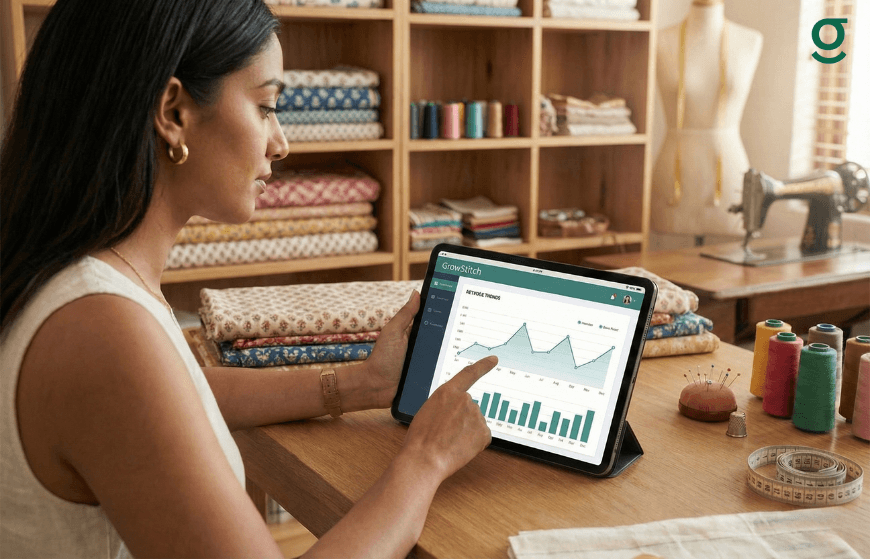
Running a boutique in the modern Indian market requires more than just a creative eye for fashion; it requires a data-driven approach to financial management. For many boutique owners, tracking success has traditionally meant counting cash at the end of the day or flipping through thick registers. However, identifying long-term revenue trends is nearly impossible with manual systems. By transitioning to a professional boutique app, business owners can gain immediate visibility into their financial health. Understanding these trends allows you to prepare for the festive rush, manage overheads, and ensure consistent growth.

How do you identify revenue trends in a tailoring app?
To identify revenue trends, a tailoring app centralizes all sales data, allowing you to compare performance across different timeframes. By analyzing metrics such as Average Order Value (AOV), total monthly sales against pre-set store targets, and seasonal order volumes, the app generates visual reports. These insights highlight whether your revenue is growing, stagnating, or dipping, enabling proactive business adjustments.
The Power of Real-Time Analytics: Transitioning from Manual Books to Digital Insights
The traditional "Khata" or manual bill book serves a basic purpose, but it is a "silent" record. It doesn't tell you if your business is healthier this Tuesday compared to the same Tuesday last year. A boutique app transforms these silent records into real-time analytics.
When every order from a simple blouse stitching to an elaborate bridal lehenga's entered into a tailoring app, the data is instantly categorized. Real-time analytics mean that as soon as a payment is recorded or an order is closed, your dashboard updates. For an Indian boutique owner, this visibility is crucial during high-pressure periods like Diwali or the wedding season. Instead of waiting until the end of the month to realize you are short on cash flow, digital insights provide a minute-by-minute update on your financial position.
Setting and Tracking Store Targets: Aligning Daily Sales with Monthly Revenue Goals
One of the most effective features of a specialized boutique app is the ability to set a "Store Target." Many small business owners operate without a specific financial goal, which makes it difficult to measure true progress.
In the GrowStitch dashboard, the first step for an owner is often setting this monthly benchmark. Once the target is set, the tailoring app provides a visual progress bar.
- Visibility: You can see exactly what percentage of your goal has been achieved.
- Motivation: It helps align your sales team or masters toward a common objective.
- Correction: If you are halfway through the month but have only reached 20% of your target, the app signals that you need to increase your booking efforts or run a promotion.
This alignment ensures that daily activities like following up on pending measurements or sending WhatsApp reminders to customers are directly contributing to your larger monthly revenue goals.
Analyzing Average Order Value (AOV) Trends: Identifying Your Most Profitable Periods
Revenue isn't just about the number of orders; it's about the value of each order. The Average Order Value (AOV) is a critical metric tracked by a professional tailoring app. For example, if your total sales for the month are ₹1,50,000 from 100 orders, your AOV is ₹1,500.
By analyzing AOV trends through a boutique app, you can identify which periods are the most profitable.
- Festive Peaks: You might find that during wedding months, your AOV jumps to ₹5,000 because customers are ordering heavy embroidery and premium sets.
- Off-Season Dips: During the monsoon or "Shradh," your AOV might drop to ₹800 as customers focus on basic alterations or simple daily wear.
Understanding these shifts through your tailoring app allows you to adjust your strategy. If the AOV is low, you might introduce "combo offers" or add-on services like premium buttons or lining to increase the bill value per customer.
Leveraging Business Insights: Comparing Daily, Weekly, and Monthly Revenue Patterns!

The "Business Insight" section of a boutique app acts as the financial pulse of the store. GrowStitch allows users to toggle between different views: Today, Yesterday, Last 7 Days, This Month, and Last Month.
Comparing these patterns helps identify specific "slow days." For instance, if your data shows that Tuesdays are consistently low in revenue (perhaps due to local market closures or cultural preferences), you can use your tailoring app to schedule staff leaves or maintenance on those days. Conversely, if Friday evenings show a consistent spike in order collections, you can ensure your finishing and procurement teams are fully staffed to handle the rush. This level of granular detail is only possible when you move away from manual tracking and embrace a dedicated tailoring app.
Data-Driven Decision Making: Using Revenue Intelligence to Plan Inventory and Staffing
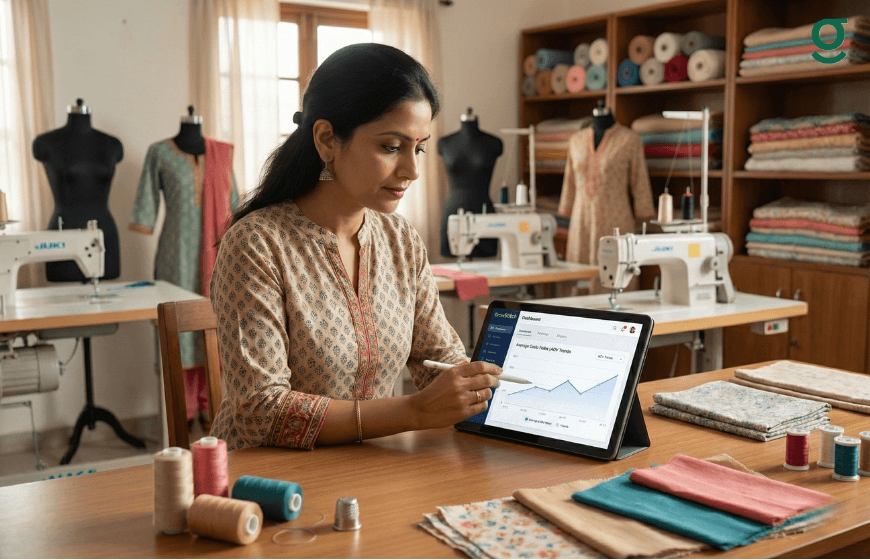
Revenue intelligence goes beyond just looking at money; it informs every operational decision. When your boutique app shows a steady 20% month-on-month growth in lehenga orders, that is a data-driven signal to act.
- Inventory Planning: You can use revenue trends to decide when to stock up on specific fabrics, threads, or embellishments. If the tailoring app indicates a surge in silk-based orders, you can negotiate better bulk prices from suppliers in advance.
- Staffing Levels: Hiring a new tailor or embroidery specialist is a significant investment. By looking at the revenue patterns over the last six months in your boutique app, you can determine if the growth is sustainable enough to support an additional salary.
- Production Stages: By integrating revenue data with production insights (tracking stages like stitching, hemming, and finishing), you can see if your current team can handle the projected revenue growth without compromising on delivery dates.
Conclusion
Identifying revenue trends is the foundation of a "Scale Smart" philosophy. A boutique app does more than just record transactions; it provides the intelligence required to navigate the complexities of the Indian fashion industry. By tracking AOV, setting store targets, and analyzing business insights, boutique owners can move from a state of uncertainty to a state of clarity. Whether you are a small tailoring unit or a large designer studio, using a tailoring app ensures that your business decisions are always backed by data, leading to a more profitable and sustainable future.
And if you move now, the first 1,000 users get exclusive early-bird access, download the app today and stay ahead while others struggle to catch up
Frequently asked Questions
1. How does a boutique app help me understand my profit margins?
While revenue tracks total money coming in, a boutique app allows you to add extra charges for items like lining, buttons, and embroidery. By comparing these total bill amounts against your known material and labor costs, you can get a clearer picture of your actual margins.
2. Can you use a tailoring app to see which of my products is most popular?
Yes. Features like "Growth Insight" in the GrowStitch app show you the top-selling products in your area and within your own shop. This helps you focus on high-revenue items.
3. Is it possible to track revenue from overseas customers separately in the app?
Yes. A professional tailoring app allows you to manage both walk-in and overseas customers, giving you geographic performance insights so you can see which market is contributing more to your revenue.
4. How often should I check the Business Insight dashboard?
For the best results, owners should check their boutique app dashboard daily to monitor targets, and perform a deeper review weekly to identify any emerging trends or production bottlenecks.
5. Does the tailoring app help with tax and billing compliance?
Yes. The app generates digital receipts and tracks transactions, including balance dues. This digital trail makes it much easier to manage your accounts and stay compliant with GST or other local regulations compared to manual paper billing.
6. Can a boutique app remind me to follow up on unpaid balances?
Absolutely. A tailoring app tracks the "balance due" for every order and can send automated payment receipt messages via WhatsApp, ensuring you don't lose revenue to forgotten payments.