
How does boutique software help understand customer demographics?
Understanding your audience is the first step to serving them better. In the diverse world of fashion, "one size fits all" is a myth. Different demographics have distinct body types, style preferences, and purchasing behaviors. Boutique management software like GrowStitch allows business owners to move beyond anecdotal evidence and analyze hard data. By leveraging measurement templates, sales reports, and customer segmentation tools, boutiques can gain a deep understanding of their specific demographic sizing needs, enabling them to tailor their offerings quite literally to their market.

Gathering Demographic Data with GrowStitch Measurement Templates
Data collection starts at the very first interaction. Every time a customer is measured, a data point is created. Boutique management software structures this intake process to build a robust demographic dataset over time.
- Structured Profiles: Unlike a manual diary where age or location might be skipped, digital profiles encourage the collection of comprehensive details. Knowing the age group of your customers (e.g., Gen Z vs. Millennials) helps correlate style preferences with sizing trends.
- Body Type Aggregation: By using standardized measurement templates for thousands of orders, the software builds a database of "average" dimensions for your specific clientele. You might find that your local demographic tends to have broader shoulders or a specific height range compared to national averages.
- Consistency: The software ensures that every staff member measures the same way. This consistency is crucial; without it, the data is too noisy to reveal reliable demographic patterns.
Tracking Category Trends Using GrowStitch Sales Reports
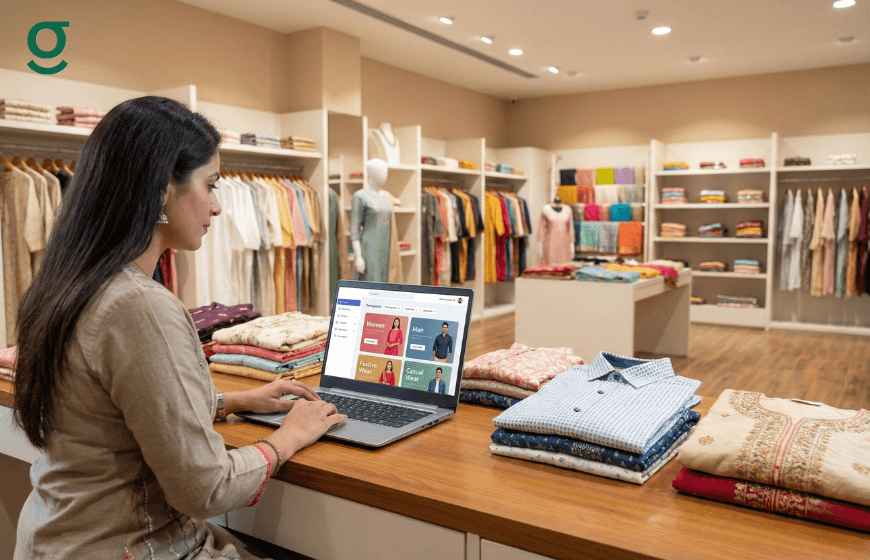
Sizing is often linked to the type of garment being purchased. A demographic that buys heavily into "oversized shirts" will have different measurement requirements than one focused on "fitted blouses."
GrowStitch's sales reports shed light on these connections.
- Category Analysis: The dashboard highlights which categories are trending. If "Maternity Wear" sees a spike, it signals a shift in the demographic needs towards adjustable, comfortable sizing.
- Seasonal Shifts: Analyzing sales over time reveals how demographic preferences change with seasons. Wedding season might bring a demand for heavier, structured garments that require different ease allowances compared to summer cottons.
- Volume vs. Value: Reports show whether your high-volume sales are coming from standard sizes or custom, complex fits. This helps in deciding whether to invest in ready-to-wear standard blocks or focus on bespoke services.
Comparing India Versus Overseas Sizing Needs with GrowStitch
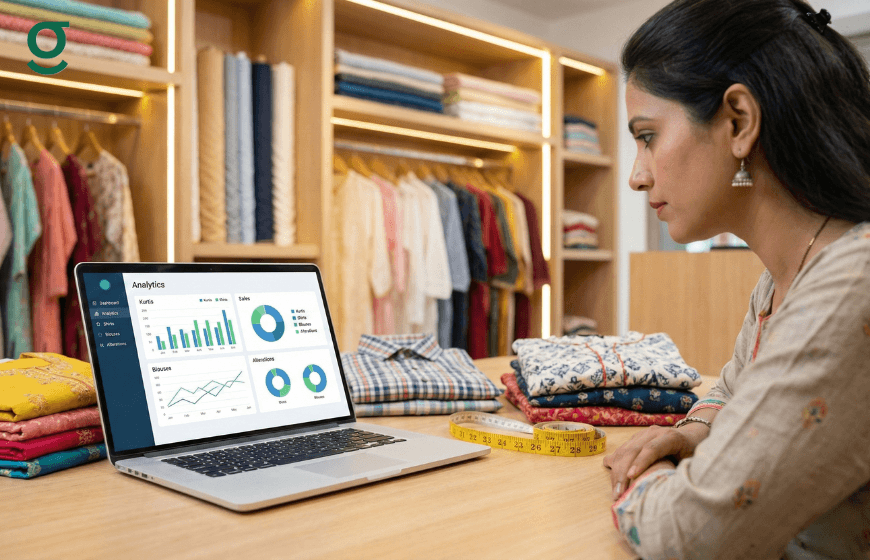
For boutiques serving both domestic and international clients, understanding the physical differences between these demographics is vital. An NRI client in the US often has different fit expectations and body metrics compared to a local resident.
Boutique management software helps segregate and analyze these distinct groups.
- Geographic Filtering: Owners can filter measurement data by location. This might reveal that overseas orders consistently require longer lengths or different sleeve circumferences.
- Fit Preferences: Overseas clients often prefer a "comfort fit" suited to western wear habits, whereas local clients might prefer a "snug fit" for traditional blouses. The software's history logs these preference trends.
- Strategic Adjustment: Armed with this data, a boutique can create separate "Standard Size Charts" for their Indian and International collections, reducing the rate of alterations for remote orders.
Segmenting Customers by Value and Preference in GrowStitch
Not all customers impact your business equally. Some are high-value trendsetters; others are occasional buyers. Segmenting them helps in understanding which demographic's sizing needs should be prioritized.
- High-Value Segments: By identifying the top 20% of customers by Average Order Value (AOV), owners can analyze their specific sizing profile. If your VIPs are mostly purchasing specific cuts, your ready-to-wear stock should reflect their sizes, not the general market's.
- Style Clustering: The software allows you to tag customers based on style preferences (e.g., "Traditional," "Modern," "Fusion"). Analyzing the measurements within these clusters can help create targeted size charts for each style archetype.
- Churn Prevention: If a specific segment (e.g., "Plus Size") has a lower retention rate, it might indicate that your current sizing or grading for that demographic is flawed, prompting a review of your patterns.
Optimizing Product Catalogs for Different Demographics with GrowStitch
The ultimate goal of analysis is action. Once you understand the sizing and preference trends of your demographics, you can optimize your catalog to serve them better.
- Smart Stocking: If data shows a high demand for "XL" sizes in the "Kurtas" category, you can adjust your procurement to stock more fabric width or pre-made bases in that size range.
- New Service Introduction: If analysis reveals a growing segment of petite customers who consistently need length alterations, you might introduce a specific "Petite Collection" or a specialized alteration package.
- Pricing Strategy: Understanding the complexity of sizing for different demographics allows for better pricing. If a specific demographic requires significantly more fabric or complex cutting, the boutique management software helps justify and implement a tiered pricing structure.
Conclusion
Demographic analysis is no longer reserved for retail giants. With boutique management software like GrowStitch, independent owners can unlock the power of their own data. By gathering structured measurement data, tracking trends across categories and geographies, and segmenting customers by value, boutiques can move from reactive tailoring to proactive planning. This data-driven approach ensures that products fit better, inventory moves faster, and the business remains perfectly aligned with the people it serves.
And if you move now, the first 1,000 users get exclusive early-bird access, download the app today and stay ahead while others struggle to catch up
Frequently Asked Questions
Can I see which sizes are most popular in my shop?
Yes. With the GrowStitch Boutique Management Software, you can analyze measurement data and sales reports to identify the most frequently ordered size ranges for different garments within your Boutique Application.
Does the software help me understand my overseas customers better?
Yes. The GrowStitch Boutique Application allows you to filter customer data by location, helping you understand sizing trends, preferences, and buying behavior of international clients separately from local customers.
How does segmentation help with sizing?
Using the GrowStitch Boutique Management Software, you can segment customers based on value, style, or ordering patterns. This helps you analyze the sizing needs of key customer groups and tailor your services accordingly.
Can I track if demographic preferences change over time?
Yes. GrowStitch stores historical order and measurement data inside the Boutique Application, allowing you to track shifts in customer preferences such as fit, length, or styling trends over time.
Is it difficult to collect this data?
No. Data collection happens automatically within the GrowStitch Boutique Management Software. Every time you create an order or enter measurements in the Boutique Application, your business dataset grows without extra effort.
Can this help me reduce fabric waste?
Yes. By analyzing sizing and fabric consumption data through GrowStitch, you can purchase materials more accurately, helping your boutique reduce overbuying and minimize fabric waste.