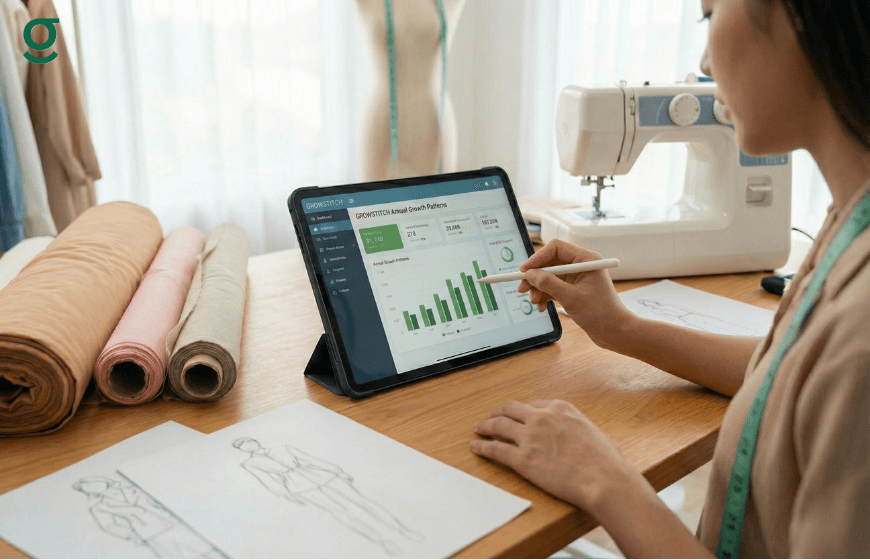
Running a successful boutique or tailoring business in India requires more than just creative design skills; it demands a deep understanding of business cycles and growth patterns. For years, boutique owners have relied on manual registers and memory to track their progress. However, as the fashion industry becomes more competitive, the shift toward digital solutions is essential. Analyzing annual growth patterns allows owners to move beyond daily operations and look at the "big picture." By leveraging a modern tailoring app, business owners can transform raw data into actionable insights, ensuring they are prepared for every peak and trough in the Indian fashion calendar.
How does a tailoring app help analyze annual growth?
A tailoring app helps analyze annual growth by centralizing sales, order, and customer data into a single digital platform. It provides automated reports on Year-on-Year (YoY) revenue, seasonal sales spikes, and Average Order Value (AOV). By using features like "Growth Insights" and "Business Insights," owners can compare current performance against historical data to identify trends, optimize inventory, and set realistic financial targets for the future.

The Power of Historical Data: Transforming Past Sales into Future Growth
In the traditional tailoring workflow, historical data is often buried in old measurement books or stacks of paper bills. When you transition to a digital tailoring app, this data becomes your most valuable asset. Historical data refers to the digital record of every transaction, customer preference, and production timeline from previous years.
For an Indian boutique, this might mean looking back at how many silk blouses were stitched last October versus this year. By using tailoring software, you can instantly generate reports that show which months generated the highest revenue. This isn't just about looking at the total amount; it's about understanding the "why" behind the numbers. Did a specific marketing effort lead to a surge in orders? Did a particular product category, like bridal lehengas, outperform everything else?
When you can see your past sales clearly through a tailoring app, you stop guessing and start planning. You can see the exact trajectory of your business growth. If your data shows a consistent 15% increase in orders every July, you can confidently hire additional staff or stock up on lining materials and threads in June. This proactive approach, powered by boutique management software, ensures that growth is planned rather than accidental.
Identifying Seasonal Peaks: Mapping the Indian Festive and Wedding Calendar
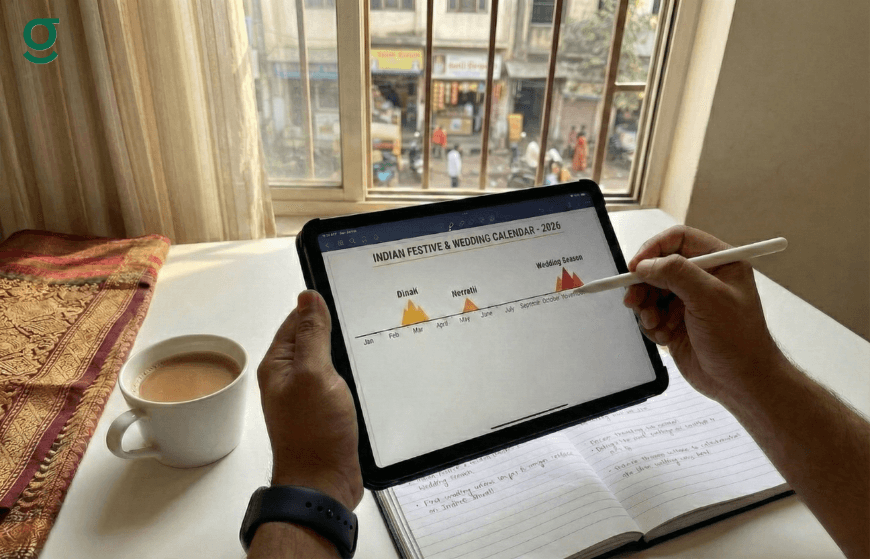
The Indian fashion market is unique because it is heavily dictated by a complex calendar of festivals and wedding "muhurtams." For a boutique owner, the difference between a profitable year and a struggling one often depends on how well they manage these seasonal peaks.
Using a tailoring app allows you to map these peaks with precision. In India, the peak seasons typically follow a pattern that repeats annually:
- The Festive Surge: Occurring between August (Raksha Bandhan/Onam) and November (Diwali).
- The Wedding Seasons: Usually split into two major blocksNovember to February and April to June.
- The Off-Peak Intervals: Periods like "Shradh" or the peak monsoon months where demand might dip.
With the Business Insight feature of your tailoring software, you can visualize these cycles. Instead of feeling overwhelmed when the "wedding rush" hits, you can look at the previous year's data in your tailoring app to see exactly when the influx of orders began. This allows for better "Store Target" setting. For instance, if you know that January is a high-demand month for bridal wear, you can set a higher sales target and allocate your best masters and tailors to those specific high-value orders.
Year-on-Year Revenue Analysis: Measuring the Success of Business Strategies
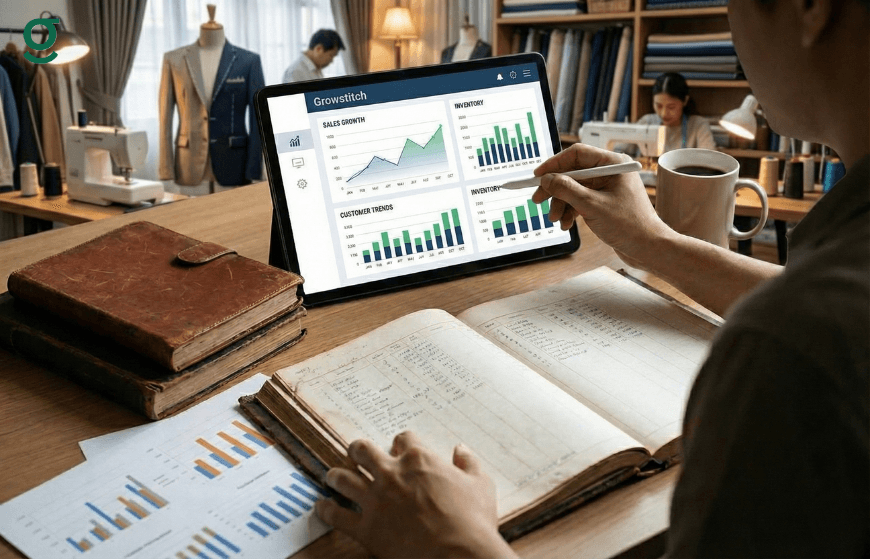
Year-on-Year (YoY) analysis is the gold standard for measuring business health. It compares the financial performance of one period against the same period in the previous year (e.g., Diwali 2023 vs. Diwali 2024). This comparison is vital because it accounts for the seasonal nature of the business.
A tailoring app simplifies this by providing a dashboard where you can view sales and AOV data for various periods. If you implemented a new referral program or started offering "Express Delivery" (a feature manageable within the GrowStitch app), YoY analysis will tell you if those strategies actually moved the needle.
| Metric | Last Year (Manual) | This Year (With Tailoring App) | Impact |
|---|---|---|---|
| Total Orders | 450 | 620 | 37% Growth |
| Average Order Value | ₹1,200 | ₹1,550 | Better Upselling |
| Production Delay | 15% of orders | 2% of orders | Higher Efficiency |
| Customer Retention | 20% | 45% | Increased Loyalty |
Tracking Customer Retention Cycles: How Annual Patterns Predict Loyalty
Growth isn't just about finding new customers; it's about keeping the ones you have. In the tailoring industry, customer loyalty is built on fit, finish, and timely delivery. A tailoring application tracks the entire customer journey, from the first measurement to the final payment.
By analyzing annual patterns, you can see how often a customer returns. Do they only come to you once a year for a major festival, or are they regular clients for seasonal wardrobe updates? The GrowStitch app allows you to import contacts and track birthdays and anniversaries. Using this data, you can reach out to customers right before their "annual" shopping period begins.
Data-Driven Financial Planning: Setting Realistic Annual Targets with GrowStitch
One of the most powerful features of a professional tailoring app is the ability to set and track "Store Targets." Many boutique owners struggle because they don't have a clear financial goal. They simply take orders as they come.
With the dashboard insights provided by tailoring software, you can set monthly and annual targets based on:
- Historical Performance: What did we achieve during this period last year?
- Market Position: How do we compare with other boutiques in our city? (Using Growth Insight features).
- Capacity: Based on our production tracking, how many units can our team actually finish?
Conclusion
Analyzing annual growth patterns is the difference between surviving and thriving in the Indian fashion industry. By moving away from manual tracking and adopting a tailoring app, boutique owners gain the clarity needed to make smart business decisions. Whether it's preparing for the Diwali rush, measuring the success of a new design line, or setting ambitious but achievable financial targets, data is the key. With the right tailoring software, you can "Start simple and Scale smart," ensuring your boutique grows consistently year after year.
And if you move now, the first 1,000 users get exclusive early-bird access, download the app today and stay ahead while others struggle to catch up
Frequently Asked Questions
1. Can a tailoring app really help me grow my boutique's revenue?
Yes. By providing insights into your Average Order Value (AOV) and seasonal peaks, a tailoring app helps you identify where you can increase prices or improve efficiency, directly impacting your bottom line.
2. How does boutique management software track my competition?
Advanced apps like GrowStitch offer "Growth Insights" that show you how your boutique ranks within your city or pin code. It identifies top-selling products in your area so you can align your offerings with market demand.
3. Is it difficult to move my manual records into a tailoring app?
Not at all. Most modern apps are designed for ease of use. You can start by importing your phone contacts and adding new orders digitally. Over time, as you input data, the tailoring software builds the historical records needed for growth analysis.
4. Can I track my production team's performance with these apps?
Absolutely. You can track orders through various stages like stitching, hemming, and finishing. This helps identify bottlenecks in your production department and ensures you meet your delivery deadlines.
5. Why is Year-on-Year (YoY) analysis better than Month-on-Month (MoM)?
In the Indian context, fashion is highly seasonal. Comparing October (festive) to September (pre-festive) might show growth, but it doesn't tell you if you are doing better than the previous festive season. YoY analysis via a tailoring app provides a truer picture of business health.
6. Does a tailoring app help with customer retention?
Yes. By tracking customer birthdays, anniversaries, and order history, the app allows you to send personalized reminders and offers, which significantly increases the chances of a customer returning for their next big occasion.