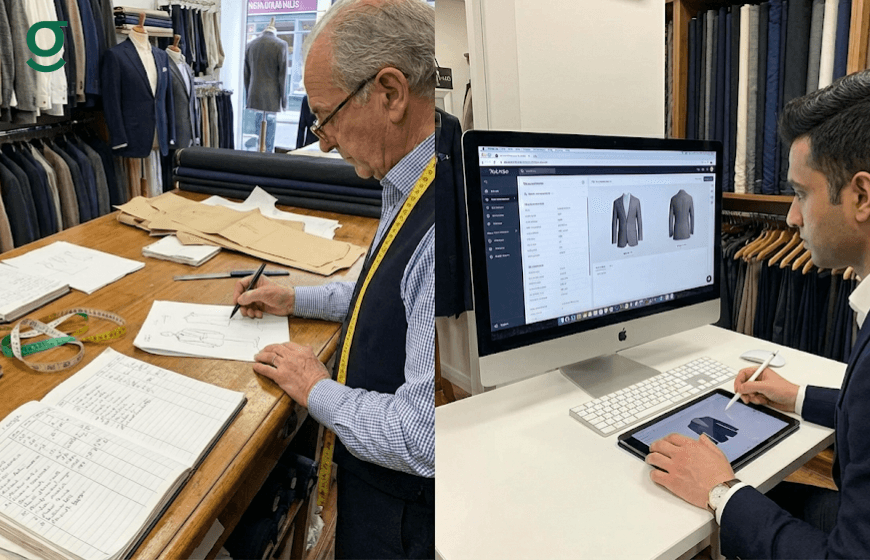
How does tailoring software professionalize a boutique's operations?
Tailoring software professionalizes a boutique by replacing handwritten bills and loose notes with a structured digital ecosystem. It establishes a verifiable brand identity through Automated Systems, ensures precise line-item clarity for complex orders (e.g., distinguishing a simple suit from an "Anarkali with Zardosi"), and provides legal and financial protection through immutable digital records. By integrating features like automated WhatsApp delivery invoice, a tailoring application elevates the customer experience from a transactional interaction to a premium service.
Your Logo as a Digital Signature Across Invoices & WhatsApp
In a manual setup, a generic receipt book offers no brand distinction. A customer receiving a handwritten slip often cannot distinguish one tailor from another once they leave the shop.
Transitioning to a digital system allows a boutique to establish a consistent brand identity.
- Digital Identity: Users can edit their profile photo and details within the application, effectively creating a digital face for the business.
- Consistent Branding: Every interaction, from the initial order creation to the final payment receipt, is processed through a standardized digital platform.
This consistency acts as a digital signature. When a customer receives a structured notification rather than a scribbled note, the perceived value of the service increases instantly. It signals that the boutique is run with the structure and clarity of a professional design studio.
Digital Line-Item Clarity: "Suit" vs. "Anarkali with Zardosi" with Automated Systems
One of the most significant causes of disputes in tailoring is vague documentation. A manual bill that simply says "Suit - ₹2000" fails to capture the complexity of the work, leading to customer confusion and undervalued services.
Tailoring software solves this through detailed catalog management.
- Specific Itemization: Instead of generic terms, the product catalog allows users to add specific new items like "plazo" for women or "Jodhpuri suit" for men, complete with optional descriptions.
- Add-on Transparency: The application supports "Add-ons" for cross-selling. You can explicitly list and charge for items like "cotton lining," "padding," or "embroidery".
This level of detail ensures that a customer knows exactly why an "Anarkali with Zardosi" costs more than a basic suit, eliminating bargaining based on misunderstanding.
Built-In Terms & Conditions: Protecting Your Boutique Digitally
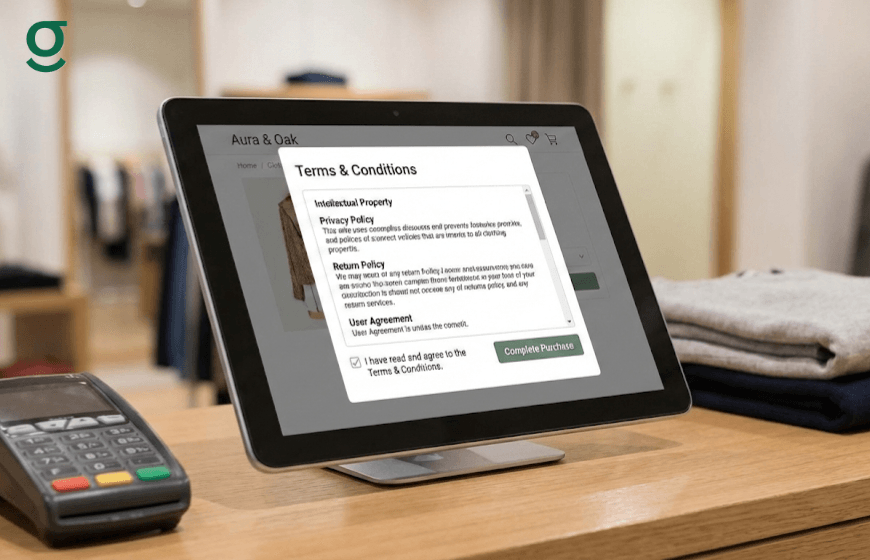
Paper bills rarely have enough space for detailed terms, and even when they do, they are often ignored. Digital platforms protect the boutique by creating an undeniable record of the transaction and the customer's requests.
The "Job Sheet" as a Contract
The software generates a "Job Sheet" containing all order details, which can be shared or printed. This serves as a formal agreement on the measurements, design, and delivery date.
Dispute Prevention via History
- Payment Records: The system tracks paid versus pending amounts and order-wise payment history. This prevents "I already paid" disputes by providing a clear, digital ledger.
- Measurement Records: By maintaining a digital history of customer measurements and notes, the boutique protects itself against claims of "wrong fit" due to weight changes or forgotten instructions.
Contact Details & Social Links Embedded in Automated Digital Invoices
A tailoring application functions as a Customer Relationship Management (CRM) tool, ensuring that connection details are always accessible.
- Centralized Data: Customer details, including email and phone numbers, are stored directly in the system, allowing the owner to initiate calls or emails directly from the app.
- Referral Integration: The platform includes features for sharing referral codes (e.g., via WhatsApp or LinkedIn), effectively embedding the boutique's network into its digital communications.
While manual bills often end up in the trash, a digital record on a customer's phone ensures they always have the boutique's contact information at their fingertips for their next order.
Digital Delivery via WhatsApp: Faster, Cleaner, More Professional
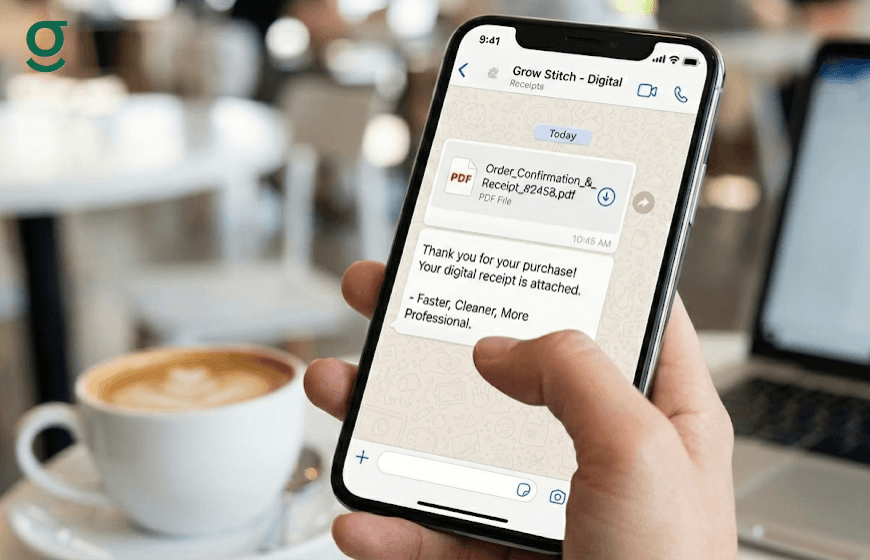
The modern customer expects speed and convenience. Relying on phone calls to announce that a dress is ready is inefficient and intrusive.
Tailoring software automates this communication channel, respecting the customer's time while keeping them informed.
- Automated Receipts: Upon order confirmation, the application automatically sends a message via WhatsApp containing the payment receipt and balance due.
- Job Sheet Sharing: The detailed job sheet can be instantly shared via WhatsApp, giving the customer immediate proof of their order without the need for physical paper.
This integration makes the delivery process faster and cleaner. It removes the friction of manual follow-ups and presents the boutique as a tech-savvy, customer-centric business.
Conclusion
The shift from manual to Automation is not just about saving paper; it is about elevating the entire store setup to meet modern standards. By adopting tailoring software, a boutique owner transforms their bill book into a branding tool, their order book into a legal safeguard, and their communication into a professional service.
With features that ensure line-item clarity, digital protection, and seamless WhatsApp integration, a tailoring application provides the clarity and control necessary to run a boutique with confidence.
To accelerate this transition, the first 1,000 customers receive exclusive early-bird access with added benefits designed to simplify daily operations.
Download the app today and take control of your boutique before your competitors do.
Frequently Asked Questions (FAQs)
1. How does tailoring software help with price disputes?
The software allows for detailed line-item billing. You can separately list charges for add-ons like lining, embroidery, or padding. This transparency helps customers understand exactly what they are paying for, reducing bargaining.
2. Is the "Job Sheet" useful for customers?
Yes. The job sheet contains all order details and can be shared via WhatsApp. It acts as a confirmation of the design, measurements, and delivery date, reassuring the customer that their order is understood.
3. Can I attach photos of the design to the digital order?
Yes. You can add reference images to the order to ensure the production team knows exactly what design to stitch.
4. Does the application send automatic updates to customers?
Yes. The application sends order confirmation and payment receipt messages, including details on pending balances, directly via WhatsApp.
5. How does the software handle repeat customers?
The software maintains a complete history of past orders and measurements. This allows you to serve repeat customers faster without needing to re-measure or ask for their details again.
6. Can I customize the items in the billing section?
Yes. You can create your own product catalog, adding new items like "Jodhpuri suit" or "Plazo" and arranging measurements using a drag-and-drop feature.