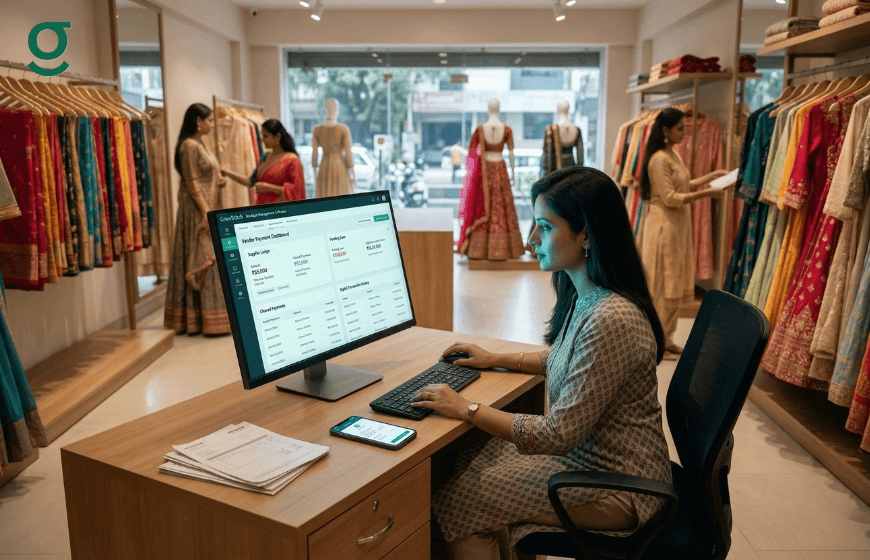
How can digitizing boutique expenses through tailoring software help owners prevent profit loss and improve financial discipline?
Managing a boutique involves more than just design; it requires rigorous financial discipline to ensure profitability. Owners can manage boutique expenses by digitizing every transaction from fabric procurement to tailor wages within a centralized boutique software. By replacing manual ledgers with automated expense tracking, fashion entrepreneurs can identify revenue leakage, monitor profit margins in real-timeand make data-driven decisions to reduce operational costs.
In the traditional Indian boutique setup, small expenses like threads buttonsand lining fabric are often paid in cash and forgotten. Over time, these unrecorded costs eat into the profit margins of every blouse or lehenga stitched. Using a specialized tailoring software allows owners to account for every rupee, providing a clear picture of the business's financial health.

Stopping Revenue Leakage through Automated Expense Tracking
Revenue leakage occurs when small, unrecorded costs accumulate or when billed amounts do not reflect the actual work done. For many designer studios, the "leak" happens because there is no bridge between the front desk and the production unit.
- Unaccounted Add-ons: Often, a customer requests an extra border or a specific tassel (latkan) during a trial. If these are not instantly added to the digital job sheet in your boutique software, they are rarely billed.
- Fabric Wastage: Without tracking procurement against specific orders, it is difficult to see if fabric is being wasted or "misplaced" in the workshop.
- Manual Calculation Errors: Hand-written bills are prone to errors in GST application or simple addition. A digital system automates these calculations, ensuring you never undercharge.
By implementing GrowStitch, boutique owners can "Set Store Targets" and monitor them against real-time sales. When every expense is logged against an order, the software provides an immediate alert if the cost of production is nearing the selling price, allowing for immediate corrective action.
Achieving Real-Time Profit and Loss Visibility for Your Studio
Most boutique owners only realize they haven't made a profit at the end of the month when the bank balance is lower than expected. Real-time Profit & Loss (P&L) analysis changes this by providing a daily window into financial performance.
Using the Business Insight dashboard, owners can view sales and Average Order Value (AOV) for today, yesterday, or the last seven days. To get a true P&L view, these sales figures must be weighed against operational expenses.
| Expense Category | How to Track via Software | Impact on Profitability |
|---|---|---|
| Direct Labor | Assigning stitching costs per order | Clear understanding of "Cost per Garment" |
| Material Costs | Tracking procurement of linings/trims | Reduces "hidden" overheads |
| Overheads | Logging rent, electricityand marketing | Determines the true break-even point |
With tailoring software, the dashboard isn't just a list of names; it is a financial map. If the AOV is high but the "Order Close" stage shows low net profit, the owner can investigate whether labor costs or material procurement prices have spiked.
Protecting Your Margins by Tracking Hidden Tailoring Production Costs
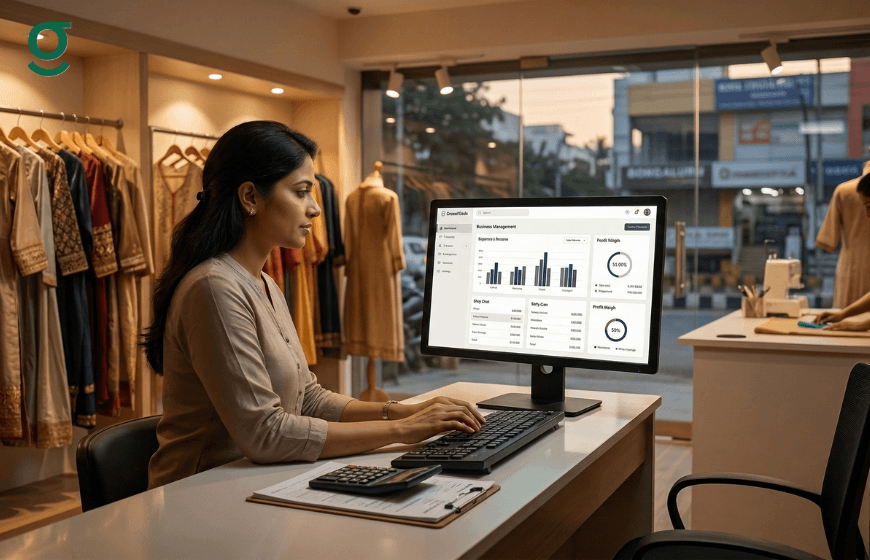
In tailoring, the "hidden" costs are often the most dangerous to a business's survival. These include the cost of alterations, delayed deliveriesand the specialized labor required for intricate embroidery.
1. The Cost of Alterations:
Every time a garment comes back for a refitting, it costs the boutique in terms of tailor time and machine usage. By using the "Production Insight" feature to track stages like "Stitching" and "Finishing," owners can identify which masters or karigars have the highest alteration rates. Reducing these errors directly protects the profit margin.
2. Procurement Tracking:
Often, production stalls because a specific zipper or button is missing. This delay is a hidden cost. By using the "Procurement" stage in the production workflow of your boutique software, you ensure all materials are ready before work begins, preventing idle labor time.
3. Specialized Instructions:
Using voice descriptions and reference images within the order file ensures the tailor gets the design right the first time. This clarity prevents the wastage of expensive fabrics, which is essential for high-end bridal boutiques where a single mistake can cost thousands of rupees.
Simplifying Vendor and Supplier Payments with Digital Records
Boutiques deal with multiple vendorsfabric wholesalers, lace suppliersand embroidery workshops. Managing these payments through manual bill books often leads to disputes or overpayments.
Moving to a digital system simplifies this by creating a permanent, searchable record of every transaction.
- Centralized Database: Instead of searching through WhatsApp chats for a fabric quote, all vendor-related communications and costs can be associated with the specific order they belong to.
- Payment Tracking: The system tracks what has been paid as an advance and what is "Balance Due." This is particularly useful for Indian boutiques that work on a credit basis with local fabric markets.
- Digital Receipts: Just as the software sends WhatsApp receipts to customers, it keeps a digital copy of every vendor bill, making it easy to reconcile accounts at the end of the financial year without digging through boxes of paper.
Transforming Raw Expense Data into Smarter Financial Growth Decisions

The ultimate goal of using boutique software is to move from simply "keeping records" to "using data." When you have a year's worth of expense and sales data, you can make strategic decisions that a manual diary would never allow.
Geographic Performance & Market Intelligence:
GrowStitch provides "Growth Insights" that show how your boutique compares with others in your pin code. If your expenses are higher than the city average but your rank is lower, it's a signal to optimize your production efficiency.
Product-Level Profitability:
The software identifies your top-selling products. By analyzing the expenses associated with these top products, you can decide whether to increase the price, find a cheaper supplier for the raw materials, or focus your marketing efforts elsewhere. For instance, if "Designer Blouses" have a lower margin due to high labor costs but "Anarkalis" have a higher margin, you can shift your seasonal collection focus to maximize profit.
Conclusion
Managing boutique expenses is the foundation of a sustainable fashion business. While creativity brings customers through the door, financial control keeps the doors open. By switching from manual diaries to a robust boutique software like GrowStitch, owners can eliminate revenue leakage, simplify vendor managementand gain a clear view of their profit and loss. In an industry where trends change weekly, having stable, data-driven financial insights allows you to "Start simple and scale smart."
And if you move now, the first 1,000 users get exclusive early-bird access, download the app today and stay ahead while others struggle to catch up
Frequently Asked Questions
1. How does boutique software help in reducing fabric wastage?
By using the "Procurement" stage in the production workflow, owners can track exactly how much fabric and trim are assigned to each order. This accountability prevents excess fabric from being used unnecessarily and helps in tracking the inventory of expensive materials.
2. Can tailoring software track the wages of my stitching team?
Yes. You can assign specific orders to team members and track the progress through stages like "Stitching" and "Finishing." This data allows you to calculate labor costs per garment accurately and ensure that tailors are paid based on the actual work completed.
3. Does the software alert me if a customer has a pending balance?
Absolutely. The dashboard shows the "Balance Due" for all active orders. Additionally, when you send a payment receipt via WhatsApp through the app, it automatically includes the remaining balance, ensuring the customer is always aware of what is owed.
4. Can I manage expenses for multiple branches in one app?
Yes. Modern boutique software is cloud-based, allowing you to see the sales, expenses and production status of multiple branches from a single dashboard. This is essential for owners who cannot be physically present at every location every day.
5. Is it possible to track the cost of alterations?
While alterations are often seen as "free" by customers, they cost the boutique time. By tracking the time an order stays in the "Finishing" or "Re-work" stage, you can quantify how much alterations are costing your business and take steps to improve the initial measurement process.
6. How do "Growth Insights" help me save money?
Growth Insights show you the top-selling products in your city and your rank compared to competitors. This helps you avoid spending money on marketing or stocking fabric for products that are not currently in demand in your specific local market.