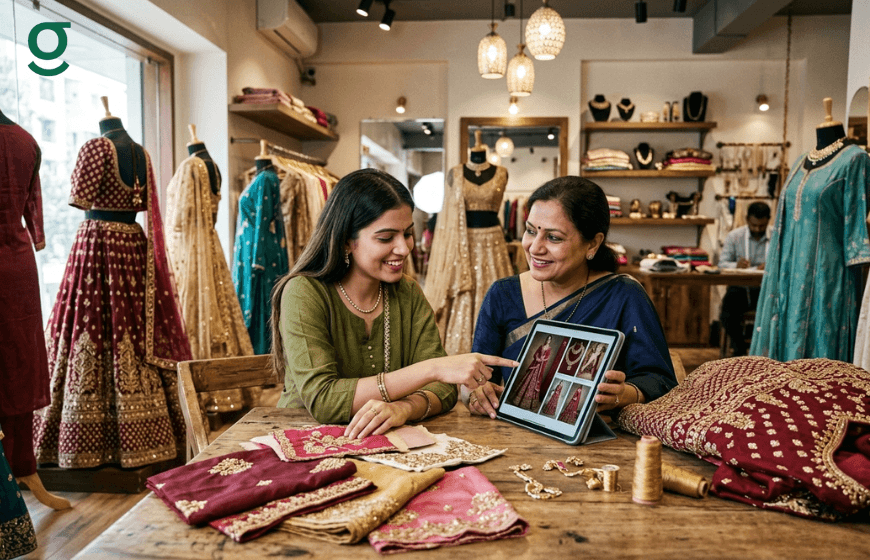
A tailoring application helps boutiques create and share digital lookbooks by organising the design catalogue within the platform, linking each design to its pricing, fabric options and customisation notes. The boutique can share a curated selection with customers via WhatsApp or a shareable link. When a customer selects a design from the lookbook, an order can be created immediately without re-entering any details. GrowStitch integrates the lookbook function with the full order workflow, turning the design presentation from a passive showcase into an active sales and order capture tool.
Most Indian boutiques share their designs through WhatsApp image dumps: 20 to 30 photos sent in a chat with no pricing, no fabric information and no easy way for the customer to confirm a selection. A tailoring application replaces this with a structured, professional presentation that makes the customer's selection experience faster and the boutique's order capture more accurate. Organising your entire boutique catalogue is the first step toward a professional pre-sale experience.

The Problem with WhatsApp Catalogues for Design Sharing
The WhatsApp image dump is the default design sharing method for most Indian boutiques. The owner or front-desk staff compiles a folder of design photos, copies them into a WhatsApp chat and sends them to the customer. The customer scrolls through, replies with 'I like the third one' and the conversation begins. The problem is that everything after that relies entirely on memory and verbal exchange.
Which fabric option was the third design made in? What is the price? Can it be made in a different colour? Is that an old design or is it from the current collection? None of this information is attached to the image. The customer has to ask. The staff has to remember or find out. The conversation extends across multiple messages over hours or days. By the time the order is created, two or three details have already been lost in translation.
The WhatsApp catalogue also has no connection to the order workflow. Even when the customer confirms a selection via WhatsApp, the front-desk staff has to re-enter all the details into the booking system or the diary. Every step between the design sharing and the order creation is a point where information can be dropped. Moving past diaries and WhatsApp as the primary operating tools is what makes boutiques scalable.
What a Digital Lookbook Inside a Tailoring Application Provides
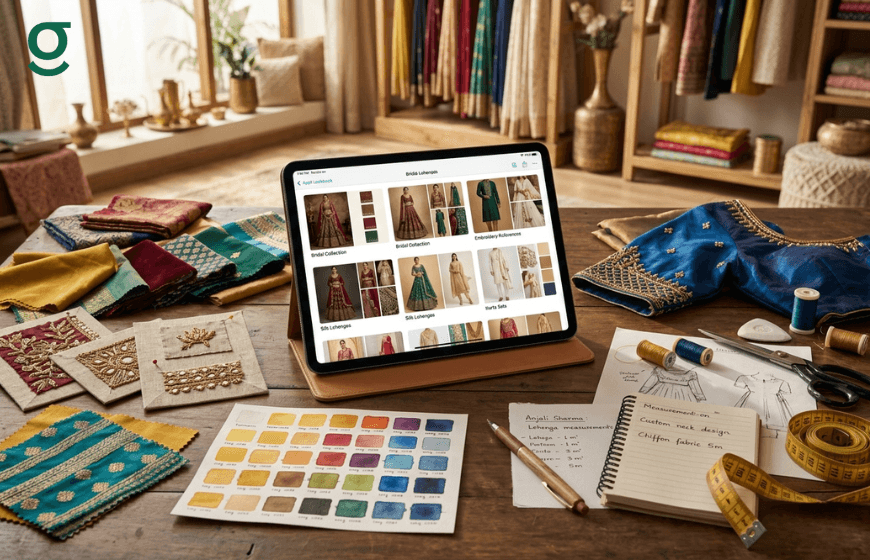
A tailoring application gives boutiques a design catalogue that is live, priced and connected to the order workflow. Each design entry in GrowStitch can include a reference image, the fabric options it is available in, the pricing for each garment type and any standard customisation notes.
Organised Design Catalogue
GrowStitch allows boutiques to organise designs by garment type, season or collection. A customer browsing the catalogue sees a curated, organised presentation rather than a scrollable image dump. The Masterji and front-desk staff see the same catalogue and reference the same design IDs in their communication, reducing the scope for confusion about which design the customer actually selected. A well-organised boutique catalogue is also the foundation for faster and more accurate billing cycles.
Pricing Attached to Each Design
In a WhatsApp catalogue, pricing is either absent or mentioned separately in the chat. In GrowStitch's lookbook, the price for each garment type is attached to the design record. When a customer selects a design and the order is created, the price is pre-populated from the catalogue. There is no separate pricing conversation and no risk of a price being communicated differently across staff members.
Shareable Link for Remote Customers
GrowStitch allows the boutique to share the catalogue or a curated selection as a link that the customer can open on their phone. For NRI customers, outstation clients and customers who prefer to browse before visiting, this link replaces the WhatsApp image dump with a professional, navigable presentation. Reaching online and remote customers through a dedicated online tailor app is what extends a boutique's geographic reach.
Direct Order Creation from the Lookbook
When a customer selects a design from the GrowStitch catalogue, the order creation screen pre-populates with the design reference, the pricing and the fabric selection. The front-desk staff adds the customer's measurements, trial date and delivery deadline and the order is complete. No re-entry. No transcription from WhatsApp into the booking system. Converting a walk-in customer into a repeat order starts with a professional, informed first interaction.
How a Digital Lookbook Changes the In-Store Customer Experience
A customer who walks into a boutique and is shown a structured, priced digital catalogue on a tablet or phone screen has a fundamentally different experience from one who is handed a phone to scroll through WhatsApp photos. The first customer sees organised options with prices attached. She knows what she is choosing and what it costs. The conversation between her and the staff is about customisation and style preference, not about basic product information.
This quality of interaction is what converts first-time visitors into repeat customers and referrers. Brand loyalty in boutiques is built through every professional interaction, including the design presentation.
The tailor app makes this possible without requiring the boutique to build or maintain a separate website or e-commerce presence. The digital lookbook lives inside the same application the Masterji and front-desk staff use every day. Unifying the customer-facing catalogue with the back-end order management in one platform removes the fragmentation that a separate catalogue tool always introduces.
Digital Lookbooks for NRI and Overseas Customers
For boutiques that serve NRI customers or clients in other cities, the digital lookbook is especially valuable. The boutique shares a curated selection with a link the customer browses at their convenience. Using a tailoring application for this purpose means the customer can select a design, confirm the fabric choice and initiate the deposit payment remotely. The order is created in GrowStitch and production begins before the customer has physically visited the boutique. For NRI customers coordinating bridalwear from abroad, this workflow removes the dependency on a single rushed visit.
This capability turns a boutique with a purely local presence into one that can take orders from anywhere in India or internationally. The lookbook is the customer-facing presentation. The tailoring application is the operational infrastructure that converts that presentation into a tracked production order.
Protecting Design Intellectual Property in a Digital Lookbook
A common concern with digital catalogues is that shared images can be forwarded to other boutiques or used without permission. GrowStitch's catalogue sharing is controlled: the boutique decides which designs to share, with whom and for how long. Shared catalogue links can be restricted to specific customers rather than being open to anyone. Customer data and design assets are protected within GrowStitch's secure infrastructure.
How a Tailoring Application Supports Seasonal Lookbook Updates
Indian boutiques operate around seasonal collections: Diwali ethnic wear, wedding season bridal sets, Eid kurtas and summer co-ords. Managing a separate catalogue for each season in a WhatsApp folder means the boutique is constantly archiving old images and adding new ones without any clear organisation. A tailoring application allows the boutique to organise designs by season or collection within the platform. When a new festive season collection is ready, the new designs are added to the catalogue and the shareable link reflects the updated selection automatically. Old season designs can be archived without being deleted, preserving the full design history for customers who want to reference a previous piece.
For boutiques that work with designers or source designs from supplier collections, the catalogue function also serves as an internal reference. The Masterji and front-desk staff access the same current catalogue from the GrowStitch platform, ensuring everyone is referencing the same design when discussing an order with a customer.
Conclusion: The Design Presentation Is Part of the Sales Process
A boutique that presents its designs in an organised, priced, shareable digital format closes orders faster and with fewer misunderstandings than one that relies on WhatsApp image dumps and verbal confirmation. GrowStitch's tailoring application gives boutiques the tools to build that professional presentation without a separate website, a separate catalogue tool or any additional technical setup. The lookbook lives inside the platform the team already uses every day. The order follows the design selection immediately without a gap. Download GrowStitch and build your first digital lookbook today.
Frequently Asked Questions
1. How does a tailoring application help create a digital lookbook?
A tailoring application creates a digital lookbook by allowing the boutique to organise designs by garment type and collection, attach pricing and fabric options to each design and share a curated selection with customers via a WhatsApp link. GrowStitch connects this design catalogue directly to the order creation workflow so a customer's selection immediately becomes a booked order without re-entering details.
2. What are the advantages of a digital lookbook over a WhatsApp catalogue?
A digital lookbook attaches pricing, fabric options and customisation notes to each design, giving customers complete information without a back-and-forth conversation. It is organised by garment type rather than a scrollable image dump. Orders are created directly from the design selection without re-entry. The overall experience is faster for the customer and more accurate for the boutique.
3. Can a tailor app share the lookbook with remote and NRI customers?
Yes. GrowStitch allows the boutique to generate a shareable catalogue link that customers open on their phone from anywhere. NRI customers and outstation clients can browse designs, confirm selections and initiate the ordering process remotely. The tailor app handles the transition from browsing to order creation without the customer needing to visit the boutique first.
4. How does a digital lookbook protect against design copying?
GrowStitch's catalogue sharing is controlled by the boutique. The owner decides which designs to include in a shared view and can restrict access to specific customers rather than broadcasting open links. This protects the boutique's design intellectual property while still enabling professional remote presentation.
5. Does the digital lookbook work for boutiques with seasonal collections?
Yes. GrowStitch allows designs to be organised by season or collection. The boutique can archive previous season designs and feature the current collection prominently. When a new festive season collection is ready, the catalogue is updated in the app and the updated link is shared with customers. No separate website update is required.
6. How does a digital lookbook connect to the order workflow in a tailoring application?
When a customer selects a design from the GrowStitch catalogue, the order creation screen opens with the design reference, pricing and fabric option pre-populated from the catalogue entry. The front-desk staff adds the customer's measurements and delivery details and the order is complete. This direct connection eliminates the transcription step that always carries the risk of an error.