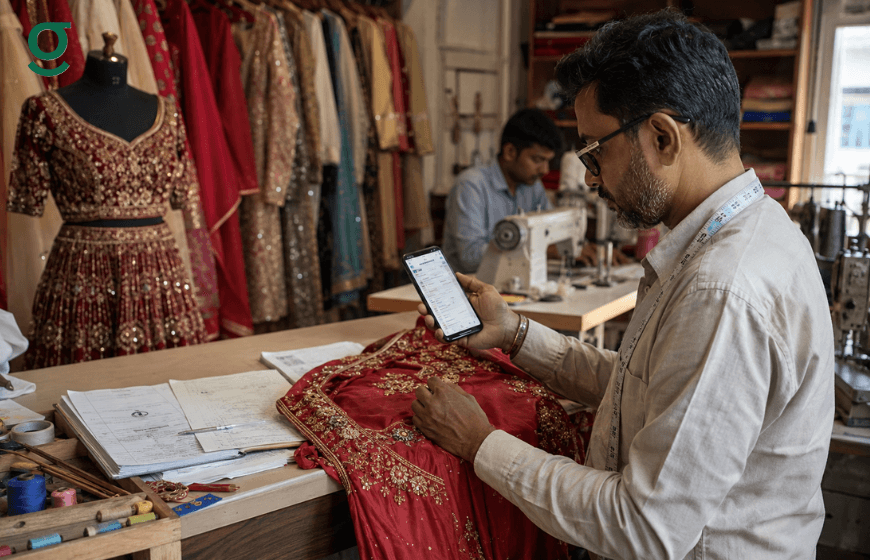
A tailoring application tracks alterations by logging every alteration request against the original order, attaching it to the customer's measurement profile and making it visible to the Karigar who handles the correction. When the same customer places a new order, the alteration history is available instantly so the same fitting error is not repeated. GrowStitch treats alteration tracking as a native part of the order workflow, not an afterthought recorded in a separate register.
Rework is one of the most expensive silent costs in a boutique. An alteration that takes three hours of Karigar time, consumes additional fabric and delays another order in the production queue costs the boutique in material, labour and schedule. Most of that cost is never measured because there is no system attributing it to the original order. A tailoring application changes that by connecting the rework event to the source order and the customer profile. Reducing alteration costs is directly linked to how accurately fitting information is recorded and retrieved.

Why Alteration Tracking Fails in Manual Boutiques
In a manual boutique, alterations are tracked on slips of paper, in a separate alterations register or not tracked at all. The process typically works like this: a customer brings in a garment for adjustment, the front-desk staff writes the alteration on a slip, the slip goes to the Masterji, the Masterji makes the adjustment and the garment goes back. The slip may or may not survive the journey. The alteration may or may not be noted against the customer's name in the measurement book.
The failure mode is predictable. Six months later, the same customer places a new order. The front-desk staff creates a new order using the customer's measurements. The measurements are technically correct but the note about her right shoulder sitting lower than her left is not retrieved. That note is the one that prevented the last alteration. The garment is made, the customer comes for a trial and the same shoulder issue reappears. The boutique absorbs another alteration, another three hours of Karigar time and another delay in the production schedule. Keeping tabs on every stitch means capturing every rework event in a searchable system.
What a Tailoring Application Does for Alteration Tracking
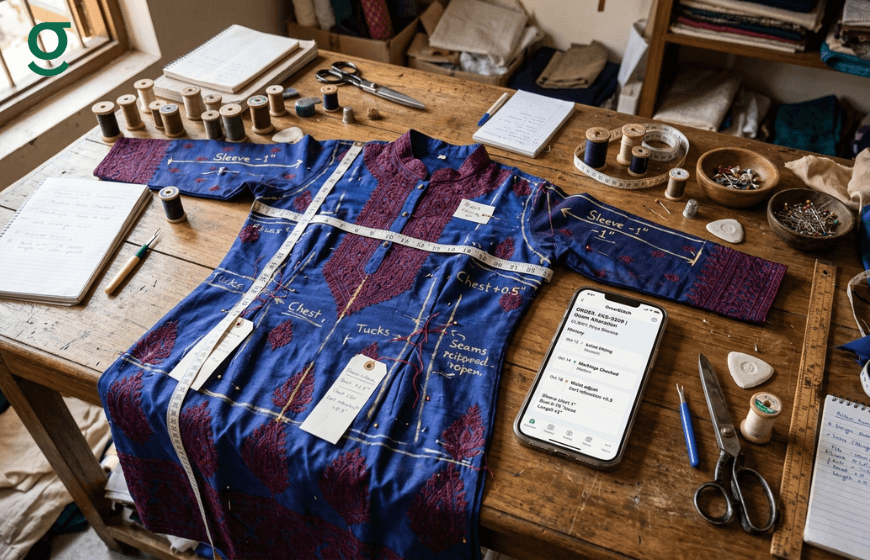
A tailoring application handles alteration tracking across four dimensions: logging the alteration against the order, attaching fitting notes to the customer profile, assigning the correction to a Karigar and attributing the cost to the original order.
![][image1]
1. Alteration Logged Against the Original Order
When a garment is returned for alteration, GrowStitch creates an alteration record linked to the original order. The record includes the adjustment required, the reason, the target completion date and the Karigar assigned. The original order's delivery timeline is updated to reflect the alteration. The owner sees the alteration as a separate item in the production queue without losing sight of the original order context. Capturing fitting details with precision at the alteration stage prevents the same issue recurring.
2. Fitting Notes Permanently Attached to the Customer Profile
Every alteration creates a fitting note that is stored against the customer profile in GrowStitch. The note specifies what was adjusted and why. When the customer places a future order, the fitting history is visible to whoever creates the order. The note about the shoulder asymmetry, the preferred blouse length and the waist fitting adjustment are all present before the new order goes to the Masterji. Error-free garments start with measurement and fitting data that travels with the customer.
3. Karigar Assignment and Stage Tracking for Alterations
Alterations in GrowStitch move through their own production stages: Received, In Alteration, Quality Check and Ready. Each stage update is logged with a timestamp and the staff member who moved it. The owner sees the alteration queue separately from the main production queue and can see if alterations are accumulating behind one Karigar or if a batch of corrections from the same period is creating a bottleneck. Stage-wise tracking at the alteration level is what prevents corrections from becoming invisible delays.
4. Rework Cost Attribution
In a manual boutique, the cost of an alteration: the fabric, the Karigar time, the delay to other orders, is absorbed silently into the general overhead. GrowStitch links the alteration record to the original order, making it possible to calculate the rework cost per order and per garment type over time. This data shows which garment types generate the most alterations, which Karigars have the highest rework rates and which fitting points are most frequently incorrect. A tailor measurements app that captures fitting data precisely is the upstream fix for downstream alteration costs.
Alteration Tracking: Manual vs GrowStitch Tailoring Application
| Alteration Type | Manual Boutique | GrowStitch Tailoring Application |
|---|---|---|
| Sleeve length correction | Note on a slip that may not reach the Karigar correctly. | Alteration logged in order record with measurement and reason. Assigned to Karigar immediately. |
| Waist adjustment after trial | Verbal instruction. Karigar may remember differently. | Fitting note captured digitally after trial. Visible to Karigar on production screen. |
| Repeat alteration on same customer | No record of previous alteration. Same error may recur. | Full fitting history available on the customer profile. Previous alterations visible before new order begins. |
| Alteration after delivery | Tracked in a separate book or not tracked at all. | Post-delivery alteration created as a linked order. Tracked separately but connected to the original. |
| Cost attribution | Alteration cost absorbed. Never attributed to the original order. | Rework orders flagged and traceable against the original order for profitability analysis. |
How Alteration History Prevents Repeat Errors
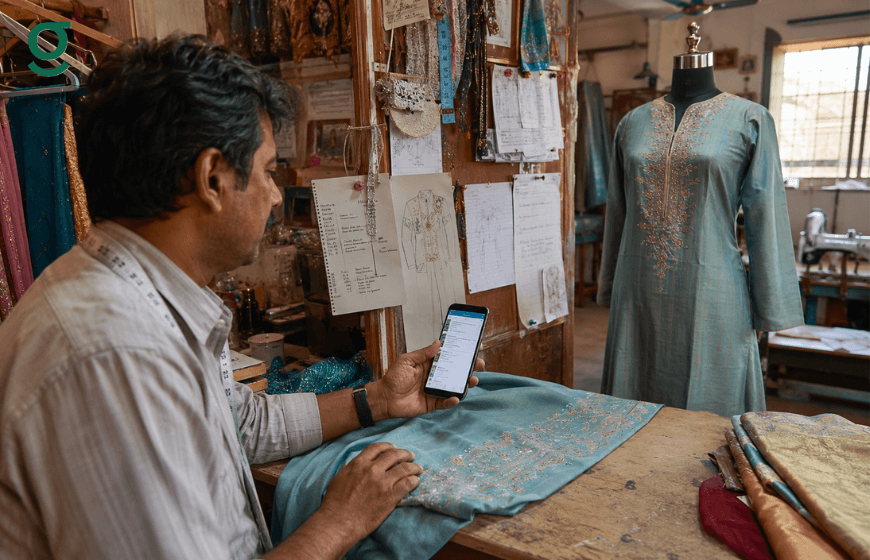
The most valuable function of alteration tracking in a tailoring application is not the tracking itself. It is the prevention of the next alteration. When the fitting notes from a customer's previous order are available at the start of the next order, the Masterji and the Karigar know what adjustments to make proactively rather than reactively. The shoulder issue is corrected at the cutting stage, not at the trial.
Over time, this prevention layer becomes the boutique's quality standard. Customers who have ordered multiple times experience progressively fewer trials and alterations because their fitting history has been built up accurately in GrowStitch. The boutique's reputation for fit accuracy grows. Standardised measurement capture is the foundation that makes this improvement possible across all garment types.
For boutiques that handle multiple garment types per customer, such as a lehenga, a blouse and a kurta set in the same season, the fitting profile becomes rich quickly. Each alteration adds a layer of precision to the customer's record. Verifying measurement accuracy through a structured digital record prevents first-order assumptions from causing repeat errors.
Handling Post-Delivery Alterations
Post-delivery alterations are a distinct challenge. The garment has left the boutique. The customer calls two days later to say the blouse is too tight at the underarm. In a manual system, this alteration may be noted in a separate book or may not be recorded at all. When the customer's next order is created months later, the underarm issue that caused the post-delivery alteration is invisible.
In GrowStitch, a post-delivery alteration is created as a linked order connected to the original. The reason for the correction is logged. The fitting note is added to the customer profile. The next order begins with this information already in view for the Masterji. The tailoring application treats the post-delivery alteration as part of the customer's permanent fitting record, not as a one-off complaint that disappears after the correction is made.
Conclusion: Alteration Tracking Is a Quality Investment
Every boutique that handles custom garments will receive alteration requests. The question is not whether alterations happen but whether the boutique learns from each one. A tailoring application like GrowStitch turns every alteration into a permanent fitting record that prevents the same error from occurring on the next order. The Karigar time saved, the fabric preserved and the delivery schedules protected across a year of reduced rework represent a significant operational improvement. Download GrowStitch and start turning your alteration history into your quality standard.
Frequently Asked Questions
1. How does a tailoring application track alterations?
A tailoring application tracks alterations by creating a linked alteration record against the original order when a garment is returned for correction. The record includes the adjustment required, the reason, the Karigar assigned and the target completion date. All alteration notes are stored permanently against the customer profile and are visible when the next order is created.
2. How does alteration tracking prevent the same fitting error from recurring?
When an alteration is logged in GrowStitch, the fitting note specifying the correction is attached to the customer's profile. When the customer places a new order, the fitting history including all previous alterations is visible to the Masterji before he begins work. The proactive correction is made at the cutting stage rather than discovered at the trial, eliminating the rework cycle on the second order.
3. Can a tailor app track post-delivery alterations separately from regular production?
Yes. GrowStitch allows post-delivery alterations to be created as linked orders connected to the original. They move through their own production stages: Received, In Alteration, Quality Check and Ready. The tailor app tracks these corrections in the production queue without confusing them with new orders. The fitting notes are added to the customer profile regardless of whether the alteration happened before or after delivery.
4. How does a tailoring application attribute rework costs to the original order?
GrowStitch links each alteration record to the original order. This connection makes it possible to calculate the Karigar time and any additional material consumed on the correction. Over a month, the owner can see which garment types generate the most alterations and what the cumulative rework cost is per order type. This data directly informs pricing adjustments and Karigar performance reviews.
5. Does tailoring software help reduce alteration rates over time?
Yes. Tailoring software reduces alteration rates by capturing fitting notes accurately at each trial and making them available for future orders. Boutiques that use GrowStitch consistently report fewer second trials and fewer post-delivery corrections on repeat customers because the fitting profile improves with each order.
6. How are alteration records different from standard order records in GrowStitch?
Alteration records in GrowStitch are linked to the original order rather than standing as independent orders. They appear in a separate alteration queue in the production dashboard so the owner and Masterji can see the correction workload without mixing it with new order production. Each alteration record generates its own production stages, timestamps and staff attributions.
7. What fitting information should be captured in an alteration record?
Every alteration record should include the specific adjustment made, the measurement point that was incorrect, the reason for the error if identifiable, whether the correction required additional fabric, the Karigar who handled the correction and whether a follow-up trial was needed. All of this information builds the customer's fitting profile for future orders.