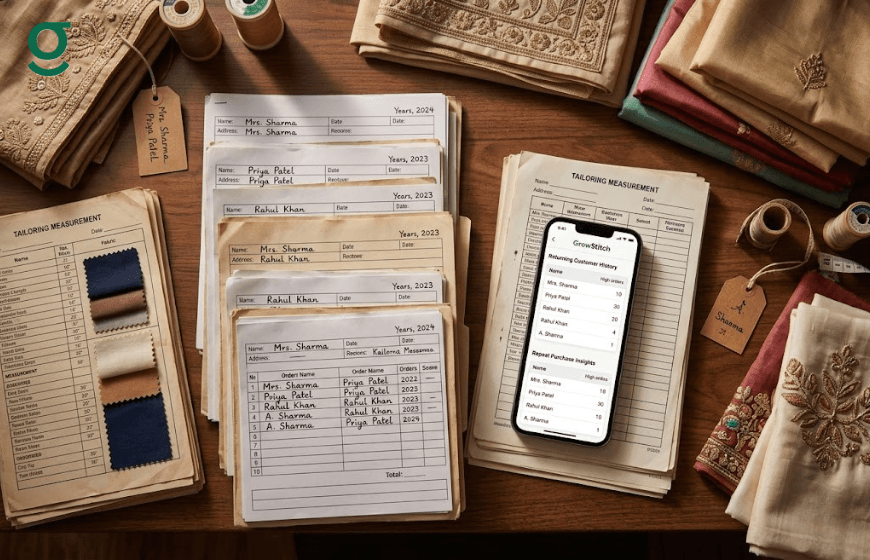
Tailoring software tracks customer loyalty by maintaining a complete digital record of every customer's order history, measurement profile, visit frequency and spending pattern. This makes it possible for boutique owners to identify their most valuable customers and give them a consistently excellent experience**.** Without this record, loyalty in a boutique is invisible: the owner knows roughly who comes often but cannot act on that knowledge systematically.
GrowStitch is built to convert the personal relationship that boutique owners already have with their customers into a structured, data-backed system. Turning a walk-in visit into a loyal regular starts with recognising who the customer is and what they value. This guide explains how tailoring software makes that possible at scale.

What Customer Loyalty Actually Looks Like in a Boutique
Loyalty in a boutique is different from loyalty in a retail shop. A customer who is loyal to a boutique does not return because of a discount. They return because their measurements are already on file, their last fitting notes are remembered and the Masterji who handled their bridal lehenga will handle their daughter's too. The relationship is personal and built on trust in the craft.
But that trust is fragile when it runs entirely on human memory. The Masterji who retires takes his mental notes with him. The counter staff who leaves takes her knowledge of which customers prefer which fabrics. A new team member treats every returning customer as a first-time visitor because there is no record to consult.
Tailoring software digitises that institutional memory. The customer record is owned by the boutique, not by any individual staff member. Every visit, every measurement adjustment, every preference noted and every order placed is stored and retrievable instantly.
How Tailoring Software Tracks the Signals of Customer Loyalty
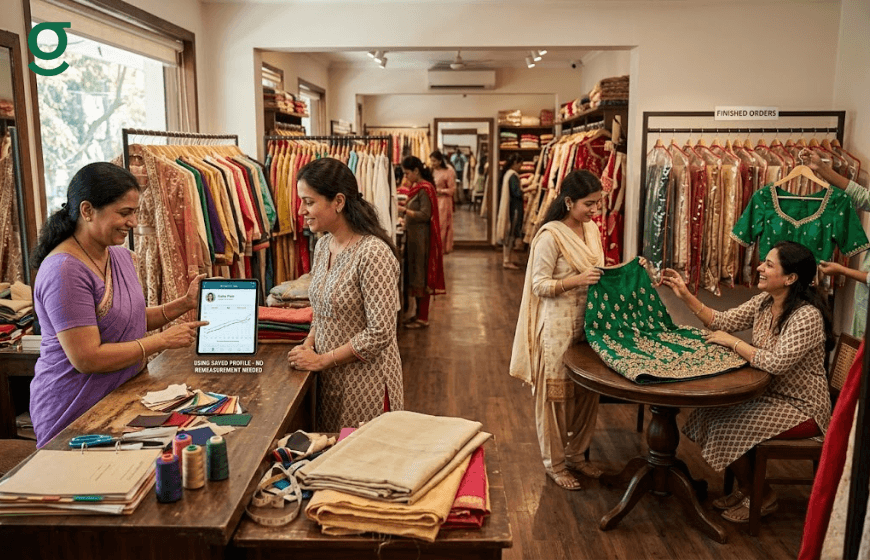
Order Frequency and Recency
GrowStitch records the date of every order against the customer profile. Over time this creates a visit frequency pattern. The owner can see that a particular customer has placed six orders in the last 14 months, with visits clustering around festive seasons. A customer who used to visit quarterly and has not been in for six months is a retention risk. Identifying these at-risk customers before they stop coming is what retention management looks like.
Order Value and Total Spend
Not all loyal customers are equally valuable by revenue. GrowStitch tracks total spend per customer across all orders. The owner can identify which customers account for the highest lifetime revenue. These are the customers who deserve priority during peak season when capacity is limited. Identifying top customers by revenue is a core function that tailoring software provides.
Garment Preferences and Repeat Patterns
A customer who always orders lehengas in a specific weight range, prefers a particular lining type and consistently adds embroidery work has a clear preference pattern. GrowStitch stores this in the order history. When that customer walks in for her next order, the counter staff can reference her last three orders instantly. The conversation starts from a place of familiarity, not a blank form.
Measurement History and Fitting Notes
Every measurement adjustment made at a trial, every note about a shoulder asymmetry or a preferred blouse length and every alteration requested after delivery is stored in the customer profile. This history is the most tangible form of loyalty data in a boutique context. The customer who returns after two years to find that her fitting notes are still on file and acted upon immediately is a customer who tells five people about the boutique.
How Tailoring Software Turns Loyalty Data into Repeat Business
Tracking loyalty data is only useful if it drives action. GrowStitch provides the data and the tools to convert it into proactive customer engagement. Personalisation alerts that trigger based on customer history drive repeat visits more effectively than generic promotions.
Seasonal Reactivation
Diwali is approaching. The owner pulls up the list of customers who ordered ethnic wear in the previous October. These are the customers most likely to want a new set this year. A targeted WhatsApp message referencing their last order is sent directly from GrowStitch. The message is personal because it is grounded in actual purchase history. The customer feels recognised, not marketed to.
Trial and Delivery Reminders
Automated reminders sent at the trial stage and at the ready-for-pickup stage are not just operational tools. They are trust signals. A customer who receives a reminder that their Anarkali is ready for trial at the time it was promised experiences the boutique as reliable. Reliability is the foundation of loyalty. Brand loyalty in a boutique context is built through consistent operational delivery.
Order Anniversary and Festival Touchpoints
GrowStitch's customer history shows when each customer placed their last order and which season it fell in. This creates natural touchpoint opportunities. A customer whose bridal order was delivered in November last year is a candidate for an anniversary or first-year check-in message. These touchpoints cost nothing but reinforce the personal nature of the boutique relationship.
The Loyalty Data a Tailoring Application Provides
A tailoring application like GrowStitch does not just store orders. It builds a longitudinal customer record that grows more valuable over time. After 12 months of use, the boutique has a customer base segmented by frequency, value and garment preference. This is the foundation of a loyalty strategy that a manual system can never produce.
The key data points available in GrowStitch per customer: total orders placed, total amount spent, last order date, most ordered garment types, measurement history with fitting notes and payment behaviour. Unifying all customer data in one place is what gives this picture its value. Without unification, the data exists but cannot be acted upon.
Why Loyalty Tracking Matters More for Boutiques Than for Retail
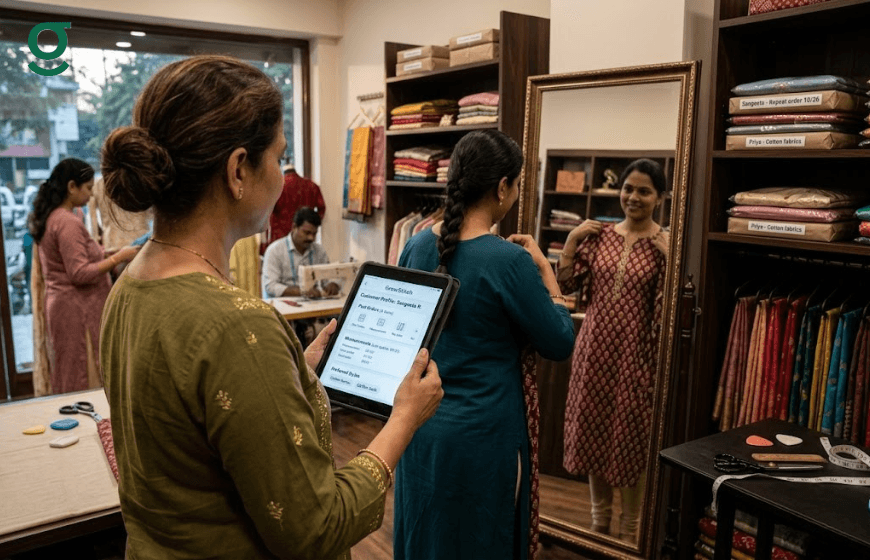
A retail shop can replace a lost customer by acquiring a new one. A boutique cannot easily replace a lost loyal customer because the replacement cost is high: new customers need a trust-building period before they share sensitive requirements like bridal orders or measurements for fitted wear. The cost of a churned loyal customer is not just the lost revenue. It is the loss of a relationship that took years to build.
This is why tailoring software that tracks retention signals is a direct business protection tool. When the data shows that a high-value customer has not been in for three months past their usual cycle, the owner can act before the customer has quietly switched to a competitor. Measuring retention and expansion with precision is what separates a growing boutique from one that is merely busy.
Conclusion: Loyalty Is Built on Memory. Make That Memory Digital
Every boutique owner already understands loyalty. The challenge is that loyalty built on personal memory does not survive staff turnover, high-volume seasons or the passage of time. Tailoring software makes the memory permanent, searchable and actionable. GrowStitch tracks every customer interaction so the relationship continues regardless of who is behind the counter. Run your boutique like a Pro: know your best customers by name, by history and by value. Download GrowStitch and start building your loyalty data from the first order.
Frequently Asked Questions
1. How does tailoring software help track customer loyalty?
Tailoring software builds a complete digital record of every customer's order history, visit frequency, total spend, measurement profile and garment preferences. This data allows boutique owners to identify their most loyal customers, spot retention risks and personalise communication based on actual purchase history rather than memory.
2. What loyalty signals does GrowStitch track?
GrowStitch tracks order frequency, recency of last visit, total amount spent, garment types ordered and payment behaviour per customer. Over time, this produces a clear picture of which customers are high-value regulars, which are at risk of churning and which are growing in their order frequency.
3. Can a tailor app send personalised messages to loyal customers?
Yes. A tailor app like GrowStitch supports WhatsApp-based customer communication triggered by order status and history. Owners can reach out to customers based on their last order date, approaching festival seasons or order anniversaries. These targeted messages feel personal because they are grounded in the customer's actual history with the boutique.
4. How does a tailoring application differ from a loyalty points programme?
A loyalty points programme rewards transactions generically. A tailoring application builds a relationship record that goes deeper: measurements, fitting preferences, order history and communication. This depth of data enables personalisation that a points programme cannot deliver. GrowStitch uses this relational record to help boutiques engage customers in ways that feel earned, not promotional.
5. Can tailoring software identify which customers have not returned recently?
Yes. GrowStitch's customer records include the last order date for every customer. The owner can filter the customer list by recency to identify customers who have not placed an order in a given period. This is the starting point for a reactivation message that references their last garment and invites them back.
6. How does tracking loyalty data improve peak season performance?
During peak seasons like Diwali and wedding season, capacity is limited. Loyalty data helps boutiques prioritise returning high-value customers in their booking sequence. Owners know which customers spent the most last season and can proactively reach out before the season opens to secure those orders before the boutique hits capacity.