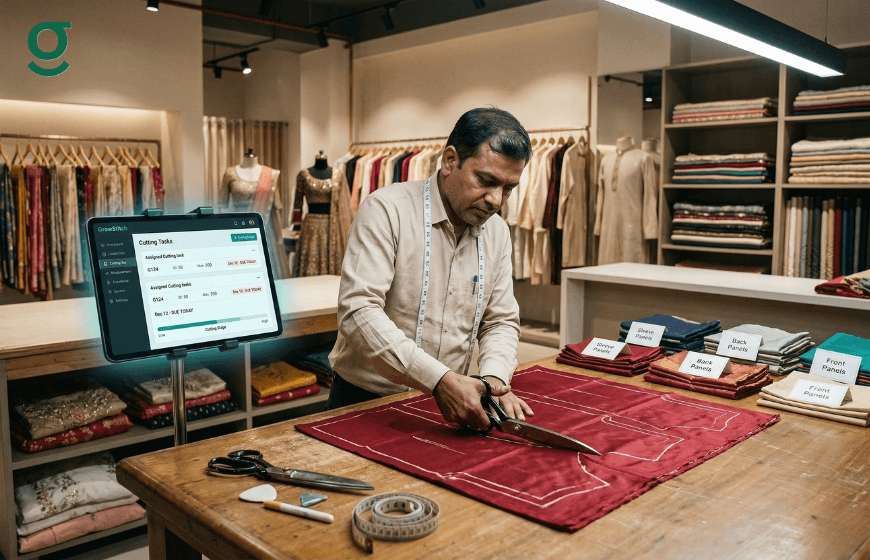
How does tailor software transform task delegation and production tracking to improve efficiency in a cloth shop or tailoring unit?
Managing a cloth shop or tailoring unit involves coordinating multiple moving parts, from taking measurements to final finishing. Using tailor software allows boutique owners to transition from chaotic manual delegation to a streamlined digital system. By assigning tasks digitally, owners maintain clear visibility into production stages and improve overall team efficiency.

How Can Tailor Software Simplify Boutique Workflows?
By consolidating order details and manufacturing stages into a single digital platform, tailor software streamlines boutique procedures and enables owners to efficiently route orders from the front desk straight to the production floor.
When a new order is created, managing the workflow manually through diaries often leads to misplaced information. A digital platform solves this by ensuring every team member knows exactly what needs to be done.
- Order details are captured in a single, guided flow.
- The system records essential details, including measurements, fabric instructions and delivery dates.
- Owners can route the order through specific production stages rather than relying on memory.
- The application centralizes communication, removing the need for scattered WhatsApp messages.
How Does Boutique Software Increase Cutting Team Accountability?
By employing role-based access and monitoring precisely which team member is in charge of particular phases, boutique software boosts accountability and guarantees total transparency throughout the critical cutting process.
Accountability is critical when handling expensive fabrics. When cutting instructions are clear and tracked, mistakes are significantly minimized.
- Only the admin can add team members and assign specific roles, such as Store Manager or Staff.
- Staff permissions can be restricted, meaning team members only see the orders or tasks relevant to their role.
- The admin can monitor system access to ensure tasks are being reviewed by the right personnel.
- Detailed digital records prevent blame-shifting if an error occurs during the cutting phase.
What Is the Best Way to Manage Tailor Tasks Digitally?
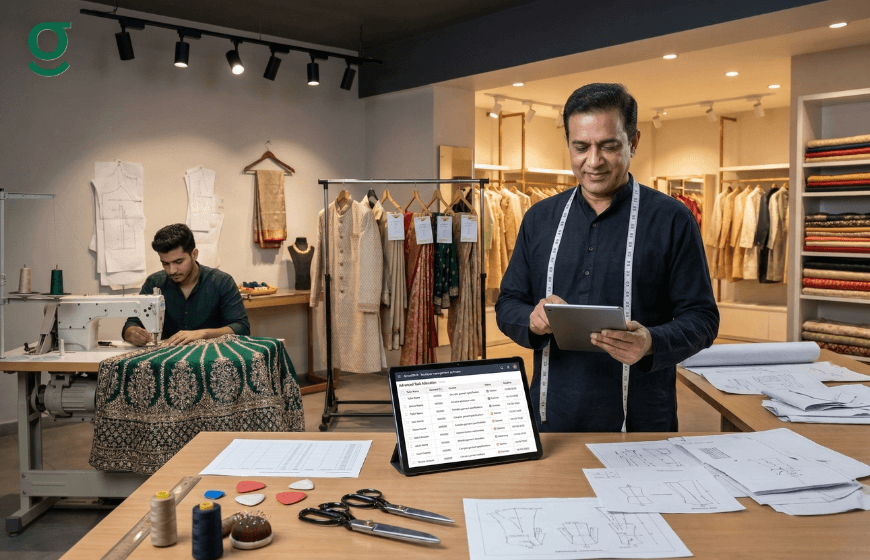
The best way to manage tailor tasks digitally is by using internal production tracking features to customize and assign specific garment construction stages directly to the tailoring team during the onboarding process.
Every boutique has a unique workflow. A rigid system does not work for custom tailoring, which is why customizable production tracking is essential.
- GrowStitch includes a "Production Insight" feature for internal tracking.
- Users can track orders as they move through specific departments.
- Standard stages like stitching, hemming, finishing and procurement are available.
- Owners can customize, skip, or assign these specific production stages based on the master tailor's actual workflow.
How Can You Track Tailor Productivity Using Boutique Software?

By tracking the real-time flow of orders via predetermined production phases within the program, you can monitor worker productivity and gain a clear understanding of completion times and any bottlenecks.
Owners may control consumer expectations and fix internal inefficiencies before they result in delivery delays by knowing where an order is stalled.
- The software continuously tracks active orders in production.
- It highlights orders that are currently due for delivery.
- Owners can see exactly which stage (e.g., stitching vs. finishing) is taking the most time.
- All production stages and their current statuses are fully visible within the application's dashboard.
Why Use Tailor Software Job Sheets Over Verbal Instructions?
Digital job sheets eliminate errors caused by verbal instructions by providing a written, standardized record of measurements, design preferences and special notes that can be easily referenced by the tailoring team.
Verbal instructions are easily forgotten or misunderstood in a busy cloth shop. A digital job sheet acts as a single source of truth for the entire production team.
- A job sheet containing all precise order details can be instantly downloaded or printed.
- Job sheets can be securely shared with the tailoring team via WhatsApp.
- Reference images can be attached directly to the order, giving tailors a visual guide to follow.
Conclusion
Transitioning to tailor software is a practical step for cloth shops looking to establish structure and clarity in their daily operations. By utilizing boutique software, business owners can effectively assign tasks, track production stages from cutting to finishingand eliminate the miscommunication associated with verbal instructions. Adopting digital job sheets and role-based tracking ensures that the entire tailoring team works cohesively, ultimately leading to timely deliveries and a highly professional production environment.
And if you move now, the first 1,000 users get exclusive early-bird access, download the app today and stay ahead while others struggle to catch up
Frequently Asked Questions
Can I customize production stages for my shop?
Yes. You can modify production stages to match your workflow, skip unnecessary steps, or assign specific stages such as stitching or hemming to designated team members during setup.
How do I share task instructions with my tailors?
You can generate a detailed job sheet containing complete order information. It can be downloaded, printed, or shared directly through WhatsApp for quick coordination.
What if a customer has special design requests?
You can record a voice note with special instructions and attach reference images directly to the digital order, ensuring nothing gets missed.
Can I restrict what my staff sees in the application?
Yes. The admin controls team access and can limit staff visibility, preventing them from viewing all orders or sensitive financial data.
How do I know if an order is delayed?
The system monitors every order in production and clearly flags those approaching or exceeding the delivery deadline, giving you full visibility of potential delays.