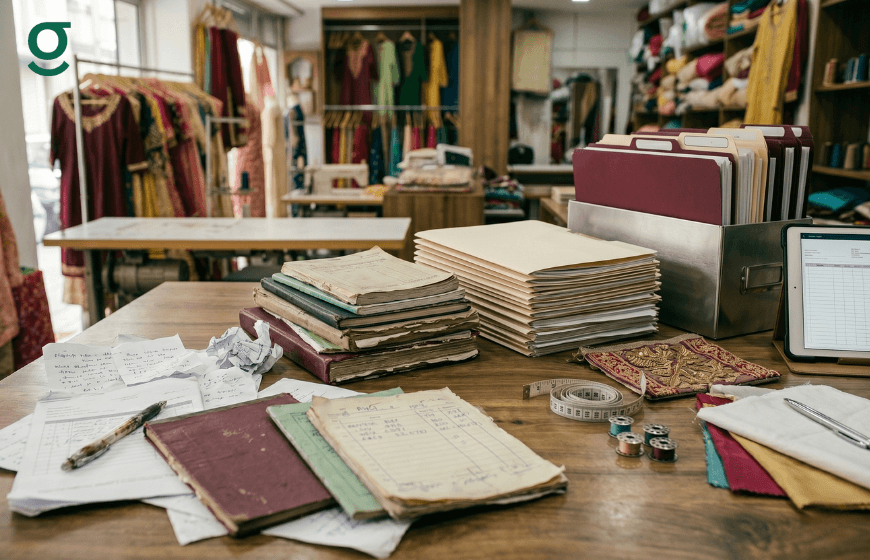
A centralised measurement database is a digital record system that stores every customer's body measurements organised by garment type, linked to their order history and accessible from any authorised device at any time. For a boutique, this database is the most valuable long-term asset the business builds: it is what makes every repeat customer interaction faster, more accurate and more professional than the previous one.
A tailor measurements app is the tool that builds this database as a byproduct of daily order creation. GrowStitch includes a tailor measurements app that structures every measurement session at the counter into a permanent, searchable, garment-specific digital record. For boutiques currently storing measurements in a physical notebook, why top designers are moving away from physical measurement books explains the specific operational and quality gains from making this shift.

Why a Centralised Measurement Database Is More Valuable Than Individual Records
A physical measurement book stores individual customer records. Each entry is independent: it cannot be searched by garment type across all customers, cannot be analysed to identify average sizing trends in the customer base and cannot be automatically cross-referenced with past orders when a repeat customer visits. It is a storage system, not an intelligence system.
A centralised measurement database built through a tailor measurements app is both. GrowStitch stores every measurement in a structured format linked to the customer profile, the garment type and the specific order. Over time, this creates a measurement intelligence layer that a physical notebook can never develop: which garment types generate the most repeat orders, which measurement fields are most frequently updated between visits and which customers have not visited in more than three months.
How GrowStitch Tailor Measurements App Builds the Database Order by Order
Structured intake at every first visit
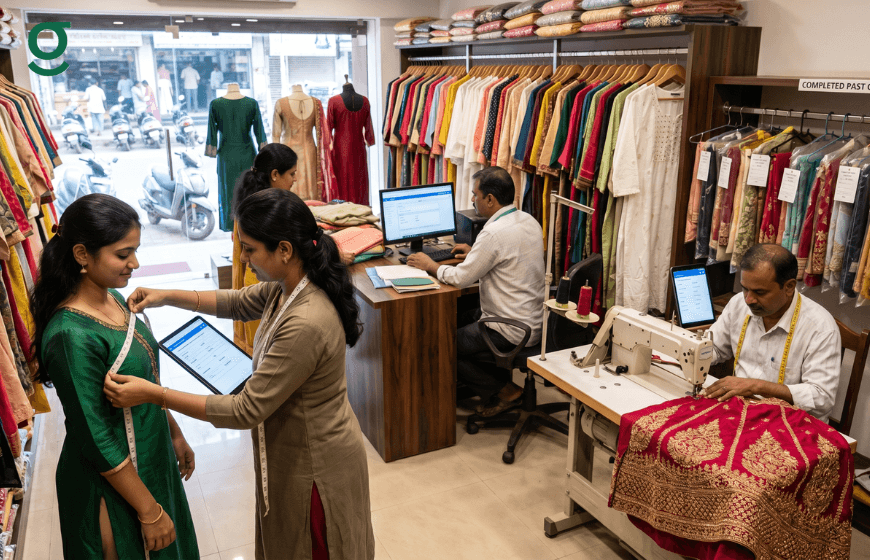
When a new customer visits the boutique, the counter staff creates her profile in GrowStitch and begins the order creation flow. The tailor measurements app prompts the staff through the measurement template relevant to the garment type: blouse, lehenga, sherwani, suit or any other garment in the boutique's catalogue. Every field entered during this first visit becomes the foundation of the customer's measurement profile in the centralised database.
The key discipline at this stage is completeness. GrowStitch's tailor measurements app enforces mandatory fields before an order can be saved, which means every first-visit measurement session produces a complete record. Error-free measurement capture from day one is the foundation on which the centralised measurement database is built.
Automatic database growth with every repeat visit
Each time a returning customer places an order, GrowStitch's tailor measurements app presents her saved measurement profile. The counter staff confirms whether measurements have changed, updates any fields that have shifted and saves the order using verified current data. This confirmation-and-update process on every repeat visit means the centralised database is always current for every customer, not just at the point of first capture.
Cross-garment measurement profiles
A customer who orders both a blouse and a lehenga from the boutique has two separate garment profiles in GrowStitch: one with blouse-specific measurements and one with lehenga-specific measurements. The tailor measurements app maintains these as separate but linked profiles under the same customer record. When she visits for a third garment type, a new profile is created and added to her existing record without replacing or disrupting the existing ones.
Measurement history and change tracking
GrowStitch's tailor measurements app stores a history of measurement changes over time. When a customer's measurements are updated on a return visit, the previous measurements are retained rather than overwritten. This history is valuable for boutiques serving customers across events over multiple years: the record of how a customer's measurements changed between her Diwali outfit last year and her bridal set this year informs the fitting decisions for the new order. Protecting customer measurement history is one of the core capabilities the GrowStitch tailor measurements app provides that a physical notebook cannot.
How to Migrate Existing Physical Records to GrowStitch Tailor Measurements App
Moving from a physical measurement book to GrowStitch does not require digitising every historical record in one session. The most practical migration approach is customer-led: when a returning customer visits, her existing measurements are entered into GrowStitch at that point. Over the course of a month, the most active customers in the boutique's database are naturally migrated as they place new orders.
For bridal customers and high-value regulars whose measurement history is particularly important to preserve, the boutique can proactively create their profiles in GrowStitch and enter their historical measurements from the physical notebook. These profiles are then ready before the customer's next visit, ensuring no repeat customer ever has to be re-measured from scratch after the migration.
The Operational Benefits of a Centralised Measurement Database
Faster repeat order processing
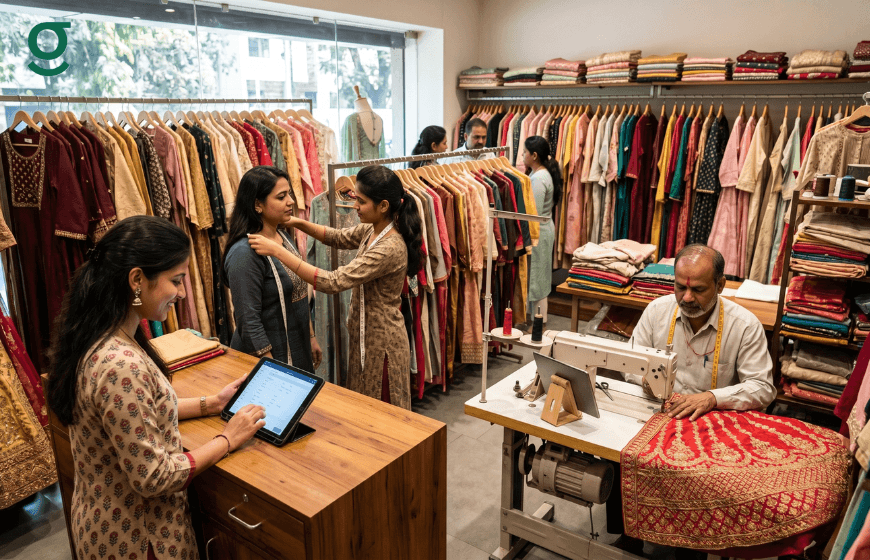
The most immediate operational benefit of a centralised measurement database built through a tailor measurements app is repeat order speed. A returning customer whose measurements are already in GrowStitch can have her new order created in under two minutes from arrival at the counter. Storing and retrieving measurements instantly for repeat customers describes exactly what this operational shift looks like in daily boutique use.
Reduced rework from measurement accuracy
A centralised measurement database built through a tailor measurements app reduces rework in two ways. First, it eliminates the handwriting misread at the counter by requiring typed entries. Second, it eliminates the transcription error in the transfer to the Masterji by generating a digital Job Sheet directly from the stored measurements. How a tailor measurements app cuts rework costs documents the specific rework reduction mechanisms in GrowStitch.
Protection against staff turnover
In a boutique where measurements live in one Masterji's handwriting in one physical book, staff turnover creates a genuine data risk. When that Masterji leaves, the measurement records become partially inaccessible to the new team. GrowStitch's centralised measurement database is owned by the boutique, not by any individual. Every measurement is stored in a standardised digital format that any authorised team member can read and use immediately.
Conclusion
A centralised measurement database is the long-term operational asset that makes a boutique more valuable over time: each new customer added, each repeat visit recorded and each measurement update captured increases the quality and speed of every future interaction. GrowStitch's tailor measurements app builds this database automatically as a byproduct of the daily order creation workflow.
The boutique that has been using GrowStitch for three years has a measurement intelligence asset that no recently digitised boutique can replicate quickly. The sooner the database starts being built, the sooner it starts delivering the operational and loyalty benefits that distinguish professional boutiques from informal ones.
Run your boutique like a Pro. Download GrowStitch free: Download GrowStitch
FAQs:
1. What is a centralised measurement database for a boutique?
A centralised measurement database is a digital record system that stores every customer's body measurements organised by garment type, linked to their order history and accessible from any authorised device. GrowStitch's tailor measurements app builds this database automatically as orders are created and updated throughout the daily boutique workflow.
2. How does GrowStitch build a centralised measurement database over time?
GrowStitch adds to the centralised database with every order: new customers have measurement profiles created at first visit, returning customers have profiles confirmed and updated at each subsequent visit and cross-garment profiles are built as customers order different garment types. The database grows in depth and completeness with every order processed through the tailor measurements app.
3. Can GrowStitch store measurements for multiple garment types per customer?
Yes. GrowStitch's tailor measurements app maintains separate measurement profiles for each garment type per customer under the same customer record. A customer can have distinct blouse, lehenga and suit measurement profiles linked to her order history, each with its own measurement fields and fitting history.
4. How does a centralised measurement database reduce boutique rework?
It eliminates two of the three main rework causes: handwriting errors at the counter through typed digital entry and transcription errors in the transfer to the Masterji through automatic Job Sheet generation. Both mechanisms together significantly reduce the frequency of measurements reaching the cutting table incorrectly.
5. What happens to the centralised measurement database if the Masterji leaves?
Nothing. GrowStitch's centralised measurement database is stored in the cloud, owned by the boutique account and accessible to all authorised team members regardless of staff changes. The measurements are in a standardised digital format that any new team member can read and use immediately, eliminating the institutional knowledge risk of physical measurement books tied to one person's handwriting.
6. How do I migrate existing physical measurement records to GrowStitch?
The most practical approach is customer-led migration: enter measurements into GrowStitch when each customer places their next order. For high-value customers and bridal clients, proactively create profiles before their next visit. Most boutiques complete the migration of their active customer base within the first month of using the tailor measurements app without any dedicated migration session.