How does a tailor app reduce alterations?
Alterations are the silent profit killers of the tailoring industry. Every garment that returns for a fit correction consumes double the labor, delays new orders, and frustrates the customer. While some alterations are inevitable due to weight changes or fabric behavior, the majority stem from miscommunication and manual errors. A tailor app like GrowStitch systematically addresses these root causes. By digitizing the measurement and instruction process, boutiques can ensure that the garment is cut and stitched correctly the first time, protecting both their margins and their reputation.

The Hidden Costs of Alterations and How GrowStitch Reduces Them
On the surface, an alteration seems like a minor annoyancea quick fix of a hem or a side seam. However, the cumulative cost is significant.
- Labor Drain: A master spending 30 minutes fixing an old blouse is 30 minutes not spent cutting a new, revenue-generating order.
- Fabric Wastage: Many alterations, especially those involving tight fits or neckline changes, require replacing panels or entire sections of the garment.
- Opportunity Cost: Delayed deliveries due to rework queues lead to dissatisfied customers who may not return.
GrowStitch acts as a preventative shield. By ensuring that the initial data entered into the tailor app is accurate and comprehensive, it drastically reduces the frequency of "avoidable" alterations caused by forgotten instructions or misread numbers.
Standardizing Measurements with GrowStitch to Prevent Fit Errors
In many boutiques, different staff members take measurements differently. One might measure length from the shoulder, another from the neck. This inconsistency is a primary driver of fit issues. GrowStitch solves this through standardization.
- Guided Templates: The tailor app provides specific fields for each garment type (e.g., Kurta, Blouse, Suit). This forces every staff member to collect data for the exact same parameters.
- Mandatory Fields: Admins can configure the app to ensure that critical measurements cannot be skipped. This prevents the common scenario where a tailor has to "guess" a missing dimension like armhole depth.
- Digital Clarity: Typing numbers into an app removes the ambiguity of handwriting. There is no confusion between a "4" and a "9," ensuring the cutter works with the exact figures intended.
Clarifying Design Details with GrowStitch Image Notes
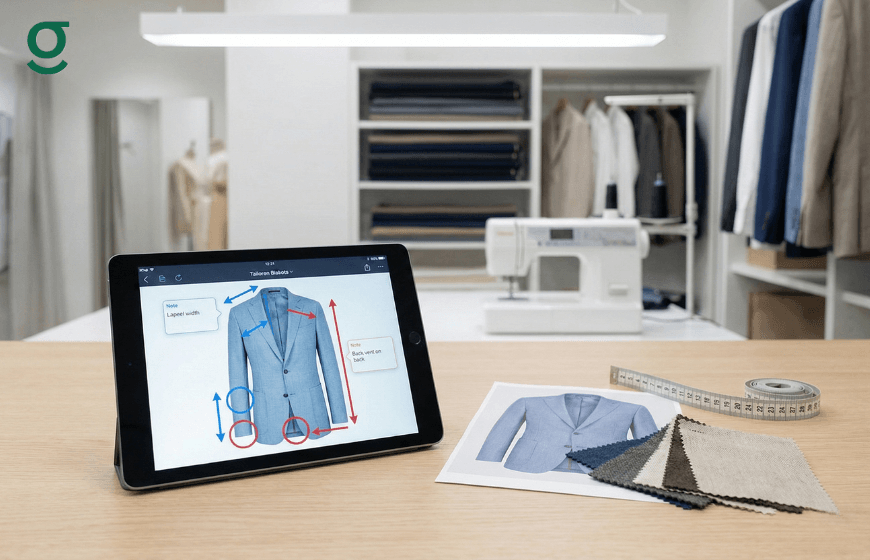
Text descriptions often fail to capture the nuance of a custom design. A note saying "deep neck" is subjectivewhat is deep for one client is conservative for another. GrowStitch bridges this gap with multimedia tools.
- Reference Images: Users can upload photos of the customer's reference design or even a picture of their posture. Visualizing the desired outcome helps the production team adjust patterns for specific body types (e.g., sloping shoulders) before the fabric is cut.
Identifying Rework Trends with GrowStitch Production Insights
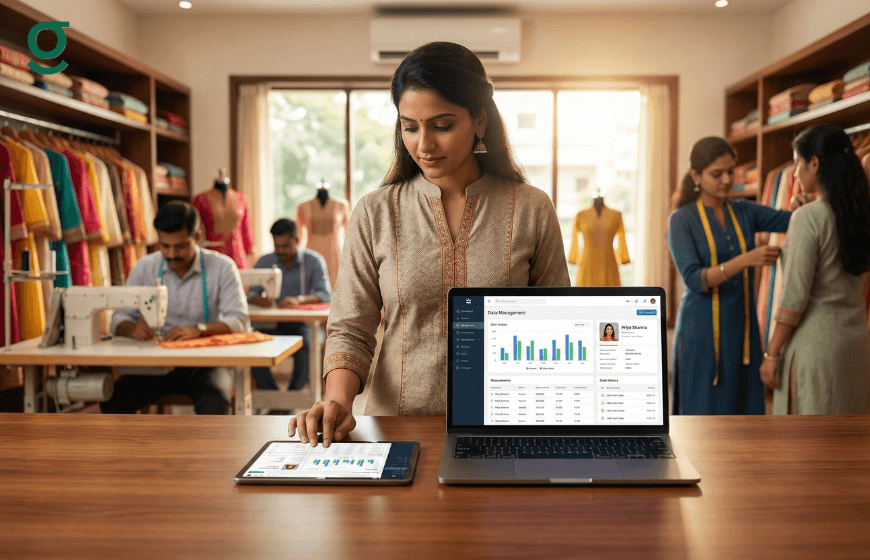
To fix a problem, you must first measure it. Manual shops rarely track why alterations happen. GrowStitch provides the data needed to identify patterns in rework.
- Stage Tracking: By tracking orders through "Stitching," "Finishing," and "Quality Check," owners can see if orders are frequently getting stuck or returned at a specific stage.
- Performance Review: If a particular tailor's work consistently returns for alterations, the data will highlight this trend. This allows the owner to provide targeted training or adjust the workflow for that specific team member.
- Customer History: The app stores past measurement profiles. If a specific customer always requires a looseness adjustment, the history serves as a reminder to add that margin proactively for future orders.
Aligning Cutting and Stitching Teams with GrowStitch Job Sheets
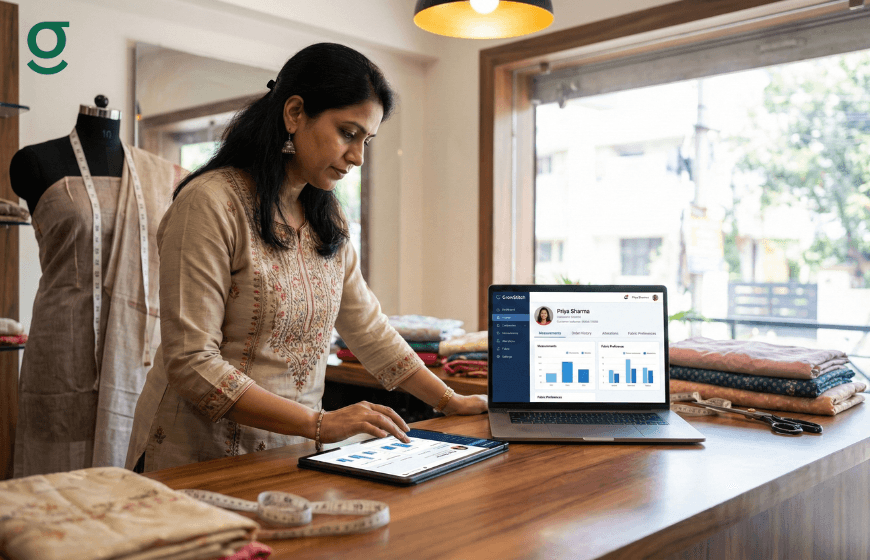
The handover between the cutter (who interprets the measurements) and the tailor (who stitches the garment) is where many errors occur. Verbal instructions are forgotten; loose slips of paper get lost.
GrowStitch automates this handover with digital Job Sheets generated by the tailor app.
- Single Source of Truth: The Job Sheet contains the standardized measurements, custom notes, and reference images all in one place.
- Accessible Anywhere: These sheets can be shared via WhatsApp or printed. Whether the tailor is in the next room or a different workshop, they have access to the same detailed instructions as the person who took the order.
- Reduced Questions: With clear visual and data-rich instructions, the stitching team has fewer doubts, reducing the "guesswork" that leads to fitting errors.
Conclusion
Reducing alterations is not just about better stitching; it is about better information management. A tailor app like GrowStitch replaces the chaos of manual notes with a structured, digital precision that aligns the entire team from the counter to the cutting table. By standardizing measurements, clarifying instructions with voice and images, and identifying rework trends, boutique owners can significantly lower their alteration rates, saving money and delivering a superior customer experience.
Frequently Asked Questions
1. How does the app help if my staff takes measurements differently?
The tailor app uses standardized templates that guide staff to take specific measurements for each garment type, ensuring consistency across your entire team.
2. Can I record complex design instructions?
Yes. You can use the "Voice Note" feature to record detailed verbal instructions and attach them to the order, ensuring the master understands the nuances of the design.
3. Does the app help me see which tailor makes the most mistakes?
By tracking production stages and identifying which orders return for rework, you can spot patterns and identify if specific team members need more training.
4. What is a Job Sheet?
A Job Sheet is a digital document generated by the app that contains all the order details, measurements, and reference images. It can be shared with your tailors to ensure they have clear instructions.
5. Can I use photos to help with the fit?
Yes. You can upload reference images or photos of the customer to the order. This helps the production team visualize the desired fit and design.
6. Will using the app really save me money on alterations?
Yes. By reducing errors caused by miscommunication, handwriting issues, and missing measurements, you reduce the labor and fabric costs associated with fixing mistakes.