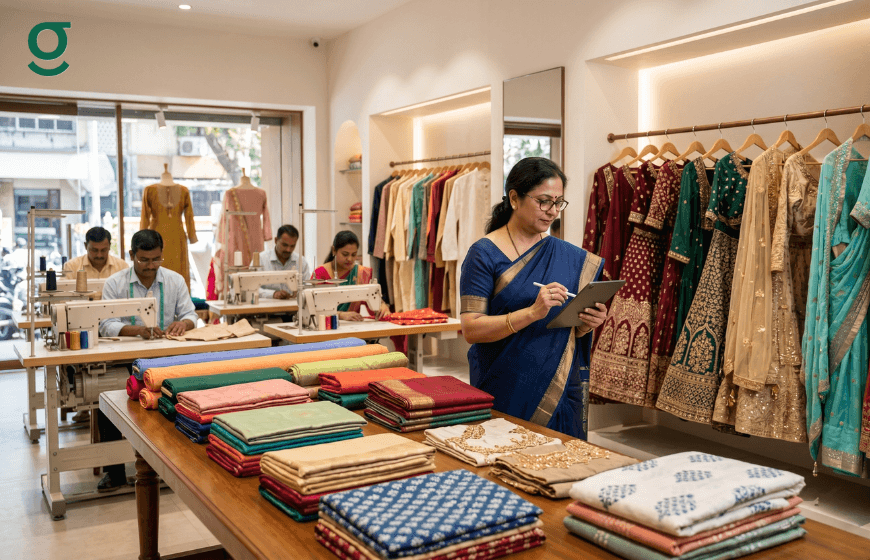
Every boutique owner in India knows the seasons. October brings Diwali. November kicks off the winter wedding rush. March brings Eid. May is the pre-monsoon lull before the summer wedding season. The demand pattern is predictable. But most boutiques still get caught off-guard every year: too many orders, too few Karigars, fabric procured in a panic and deliveries pushed back on customers who booked months in advance.
Tailoring software helps Indian boutiques forecast seasonal demand by converting historical order data into visible patterns that owners can act on before a season begins, not after it overwhelms them. GrowStitch provides the order history, production throughput and revenue trend data that turns seasonal guesswork into structured advance planning.
This guide explains what seasonal forecasting means for a boutique, which data points matter and how a tailoring application surfaces those signals. For an overview of what tailoring software covers at the operational level, that guide runs through the full picture.

Why Boutiques Get Overwhelmed Every Season Even When They Know It Is Coming
The problem is not a lack of awareness. Every boutique owner knows that October will be busy. The problem is a lack of data. Without order history from the previous year, planning is based on memory and gut feel. The Masterji thinks last Diwali had about 60 orders. The owner remembers a specific week when three bridal orders came in together. These are impressions, not numbers.
When planning is based on impressions, the boutique under-staffs, under-stocks fabric and accepts orders at the same pace as the slow season. Then week three of November arrives and the dashboard in the owner's head shows red.
The result is the cascade that every boutique owner recognises: overtime Karigar costs, delayed deliveries, strained customer relationships and fabric sourced at emergency prices. Handling high-volume festive season orders without slowing down requires advance preparation, not crisis management.
What Data Tailoring Software Captures That Makes Forecasting Possible
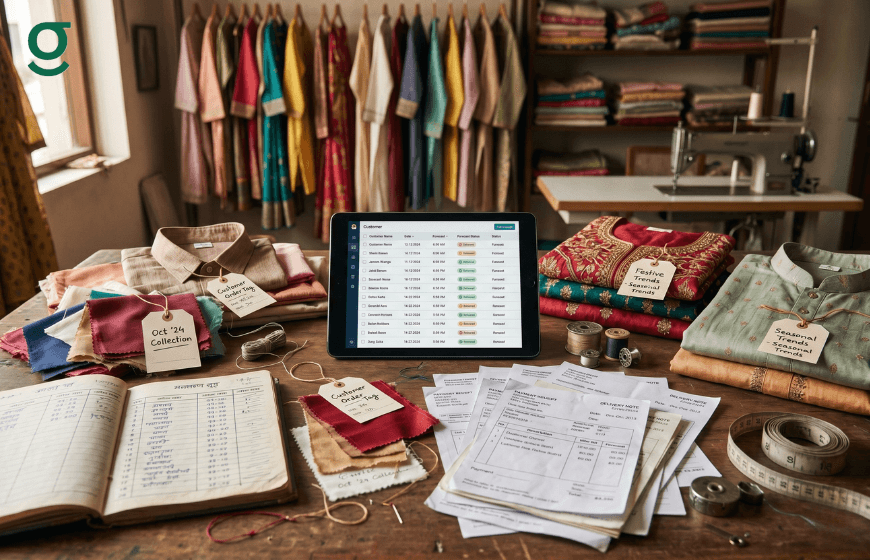
A tailoring software like GrowStitch records every transaction that passes through the boutique. Over time, this data builds into a performance history that an owner can read before each season. The four data sets that matter most for seasonal forecasting are:
1. Order Intake by Month and Week
GrowStitch records every order with an intake date. Over 12 months, this produces a clear month-by-month order volume chart. An owner can see that October had 78 orders last year, September had 41 and November peaked at 94. This is not a memory or an estimate. It is a record. The forecast for this October starts with that number, not with a feeling.
2. Average Order Value by Season
Seasonal demand is not just about volume. Wedding season orders carry a higher average order value (AOV) because bridal lehengas and Sherwanis are more expensive than regular kurtas. GrowStitch tracks AOV month by month. An owner can see that November AOV was Rs. 4,200 last year versus Rs. 1,800 in May. This informs fabric procurement budgets and payment advance requirements before the season opens. Understanding your monthly business patterns at this level is what separates a growing boutique from a busy one.
3. Production Throughput by Stage
Knowing how many orders are coming in is only part of the forecast. The other part is knowing whether the workshop can handle them. GrowStitch tracks how many days each order spends at each production stage. If the data shows that Stitching averaged 4.2 days per order in November last year with November expected to bring 90 orders, the owner can calculate whether current Karigar capacity is sufficient or whether one additional tailor needs to be onboarded in October.
4. Top-Selling Garment Types by Period
Not all seasonal demand is the same. Diwali demand skews toward blouses, Anarkalis and ethnic co-ords. Wedding season demand skews toward bridal sets and men's formal wear. GrowStitch records which garment types were ordered in each period. This informs which fabrics to stock, which Karigar specialisations to prioritise and which services to promote in the weeks leading up to each season.
Seasonal Forecasting Reference: What to Track and When
| Season / Event | What to Forecast | GrowStitch Signal to Watch |
|---|---|---|
| Wedding Season (Nov-Feb) | Bridal lehenga and Sherwani volume, lead time per order, trial slot demand. | Order intake rate from same period last year. AOV movement. Pending orders list. |
| Diwali / Festive Rush (Oct) | High volume of quick-turnaround blouses, Anarkalis and ethnic co-ords. | Production throughput last October. Average days per stage for simple garments. |
| Eid (Mar-Apr) | Kurta and salwar kameez volume, often from repeat customers. | Repeat order frequency from the same customer base. Common garment types by month. |
| Summer / Pre-Monsoon (May-Jun) | Lower volume, higher alteration and blouse work. | Month-on-month comparison. Staff utilisation by stage. |
How Boutique Management Software Turns Forecast Data into Advance Action
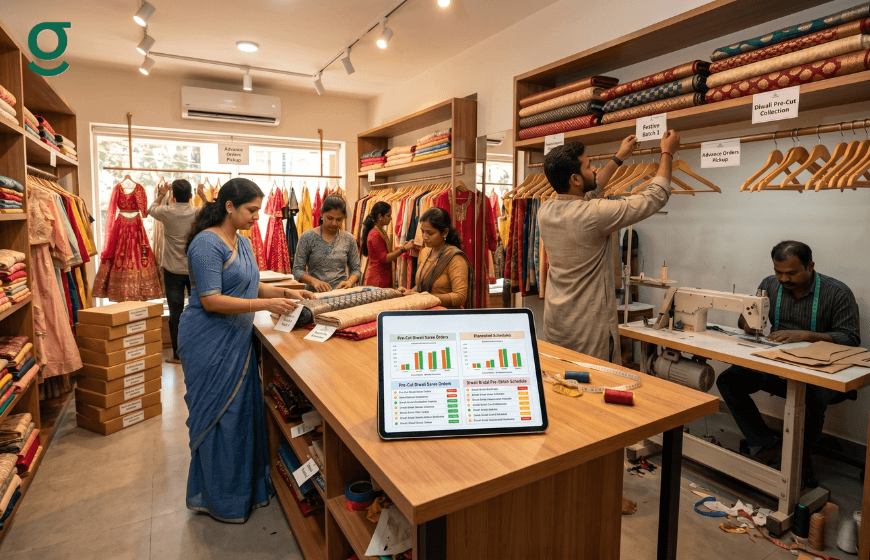
Forecast data is only useful if it triggers action before the season begins. Boutique management software like GrowStitch provides the data and the operational tools to act on it in the same platform.
Staffing Decisions
If last year's November throughput data shows the workshop hit capacity at 80 orders with this year's early booking rate suggesting 95, the owner has a six-week window in October to bring in contract Karigars. Without this data, the decision is made in week two of November when it is already too late.
Fabric Procurement
Order history shows which fabric types drove the highest volume each season. Banarasi silk in November. Cotton blends in March. Light georgette in May. A boutique that procures based on this history avoids two problems: running out of popular fabric mid-season and over-buying materials that will sit idle. This kind of advance planning is what running a boutique like a Pro actually means in practice.
Advance Booking Policy
When the owner knows that November capacity is 90 orders, they can introduce an advance booking policy in September. Customers who want a wedding-season delivery book by September 30. Orders after that date carry a rush charge. This policy is only enforceable when the owner has the data to justify it. For how to structure the full boutique management approach around data, the complete guide covers the framework.
Store Targets
GrowStitch allows owners to set monthly revenue targets. The forecasting data gives those targets a factual foundation. Instead of setting an October target based on aspiration, the owner sets it based on last October's revenue, adjusted for the current capacity plan and the early booking rate. The team works toward a number that has been earned by data, not guessed.
Using Tailoring Software for Post-Season Review
Seasonal forecasting improves every year it is practised. After each peak season, GrowStitch's order and production data provides a complete review. Which garment types ran over capacity? Which Karigar stages became bottlenecks? Which fabric categories ran short? The post-season review informs the pre-season plan for the following year. Late deliveries that happened this season become the data points that prevent next season's delays.
Over two to three years, a boutique builds a detailed seasonal model. The owner does not have to reinvent the plan each year. The GrowStitch data does the heavy work of remembering what happened, when it happened and how the business responded.
Conclusion: The Season Starts 60 Days Before the Season
Every October surge was avoidable in September. Every November delivery delay was foreseeable in October. The boutiques that handle peak demand without chaos are not the ones with more Karigars or bigger spaces. They are the ones who planned two months ahead using data from the previous year. GrowStitch tailoring software gives Indian boutique owners that data in the same platform where they run their daily operations. The forecast is already in your order history. You just need a system that shows it to you. Download GrowStitch and start building your seasonal forecast today.
Frequently Asked Questions
1. How does tailoring software help with seasonal demand forecasting?
Tailoring software records every order with an intake date, garment type, production timeline and revenue value. Over 12 months, this history produces month-by-month patterns showing which seasons bring the highest volume, which garment types dominate and how long the workshop takes to process them. Owners use this data to plan staffing, fabric procurement and booking policies before each peak season.
2. What is the biggest forecasting mistake boutique owners make?
Planning for a new season based on memory rather than records. Memory filters out the bad weeks and exaggerates the good ones. It cannot tell you that last November had 94 orders with a 4.2-day average stitching time. Only a system that records every transaction can provide that number. Boutiques that plan from data respond earlier and more accurately.
3. Can a tailoring application help with Karigar capacity planning?
Yes. A tailoring application that tracks production stage durations provides the data needed for capacity planning. If the data shows that stitching takes an average of 3.8 days per order and the season is expected to bring 90 orders in four weeks, the owner can calculate whether current Karigar strength is sufficient. This calculation is impossible without the throughput data.
4. How far in advance should a boutique start seasonal planning?
Six to eight weeks before a peak season is the minimum effective window. Staffing decisions require four to six weeks of lead time. Fabric procurement for premium materials requires three to five weeks. Advance booking policies need to be communicated to customers at least four weeks before the season opens. All of these actions depend on the forecast being complete at least six weeks out.
5. Does GrowStitch show order history and revenue trends?
Yes. GrowStitch tracks order intake, revenue and production data over time. The Analytics and Insights module provides month-on-month comparisons and garment-type breakdowns that owners can use for seasonal planning. The data is available in the same app where orders are managed, which means it is always current.
6. How does boutique management software help during peak season itself?
During the peak season, boutique management software provides real-time production visibility so the owner can see which orders are at risk of delay before customers start calling. Stage-wise tracking, automated WhatsApp updates and the pending order dashboard all help manage a high-volume period without the chaos that comes from manual tracking.