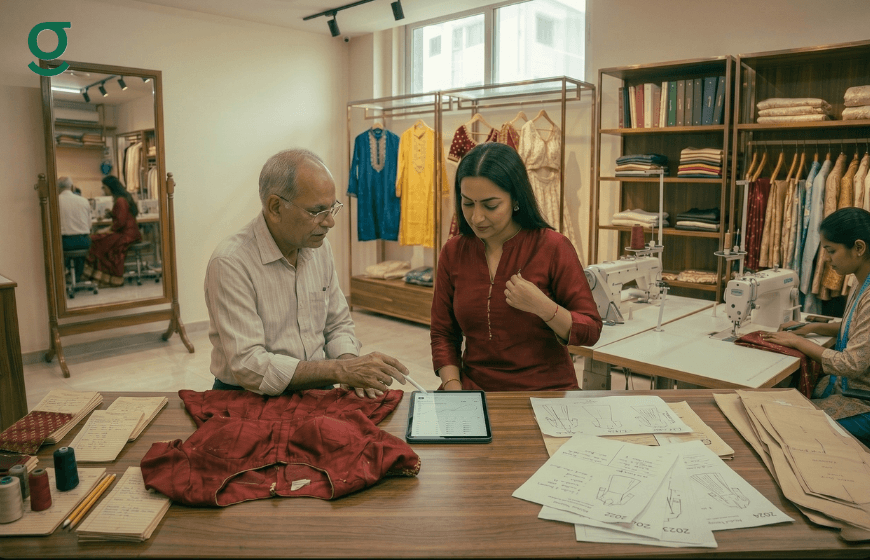
A tailoring measurement book is a record system that stores client body dimensions for custom garment stitching. When used strategically, it becomes something more valuable: a tracking tool for how a client's measurements change over months and years. For Indian boutiques managing long-term relationships with repeat clients, this dimension of the tailoring measurement book is the difference between delivering a garment that fits and a garment that needs three rounds of alteration.
This guide explains how a tailoring measurement book should be used to track body changes across visits, why this matters for repeat order quality and how GrowStitch builds this tracking capability into every customer profile automatically.
Why a Tailoring Measurement Book Must Track Change, Not Just Data
Most tailoring measurement books, whether physical or basic digital, store a single snapshot of the client's dimensions. The Masterji takes measurements on the first visit, records them in the tailoring measurement book and refers to that record for every subsequent order. This approach fails repeat clients because bodies are not static.
A client who last visited eighteen months ago for a wedding lehenga may have experienced significant body changes since then. Weight gain or loss, pregnancy, post-pregnancy recovery, increased fitness activity and natural age-related changes all shift the key dimensions that determine whether a custom garment fits correctly. A tailoring measurement book that does not capture these changes is not serving the client's current body.
Measurement accuracy and rework costs are directly connected in tailoring businesses: How a Tailor Measurements App Helps Boutiques Cut Rework Costs.

What a Proper Tailoring Measurement Book Entry for Repeat Clients Includes
A well-structured tailoring measurement book entry for a repeat client includes the date the measurements were taken, the specific dimensions recorded, the garment type the measurements relate to and any fitting notes from the previous appointment. Fitting notes are critical because they capture context that raw measurements cannot: a slight shoulder slope that needs adjustment, a preference for extra ease in the hip, a neckline depth the client requests consistently.
For repeat clients, the tailoring measurement book should show a chronological history of entries. This allows the Masterji to compare the current measurements against previous ones and identify what has changed before cutting begins.
Understanding the full scope of what a boutique measurement book must capture: What Is a Boutique Measurement Book and Why Paper Registers Are Holding You Back.
How Paper Tailoring Measurement Books Fail Repeat Clients
No Date Stamps on Measurement Entries
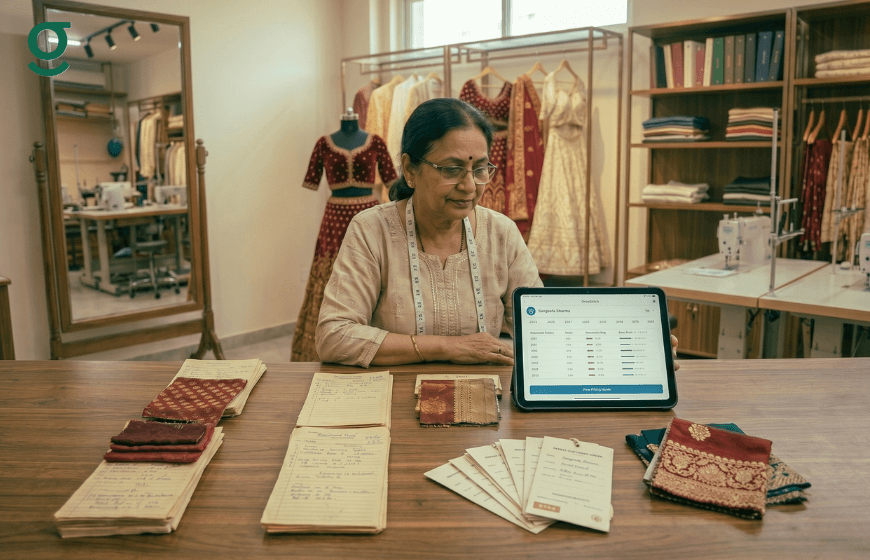
A physical tailoring measurement book rarely records the date each measurement was taken. When a repeat client returns after a long gap, the Masterji cannot determine whether the record is six months or two years old. In the absence of a date, most Masterjis use the existing measurement, creating a garment cut to dimensions that no longer fit.
Multiple Entries Create Confusion
When a Masterji adds new measurements for a returning client in a physical tailoring measurement book, the old entry usually stays on its original page. There is no clear indication of which record is current. A different staff member accessing the register may use the wrong entry without realising it. The result is a cutting error that does not surface until the fitting.
No Visual Comparison Between Past and Present
A paper tailoring measurement book offers no way to compare old and new measurements side by side. The Masterji must flip between pages, remember what the old figure was, compare it mentally to the new one and note the change somewhere. This is impractical during a busy appointment. Most simply use whichever measurement they find first.
Fitting Notes Are Lost Over Time
The value of a good tailoring measurement book goes beyond raw numbers. Notes about a client's posture, their fitting preferences, the adjustments made on previous garments and their specific pattern requirements are the intelligence that makes a repeat order better than the first. In a physical register, these notes often appear in margins, in different handwriting and in different ink, with no structure that makes them reliable for future reference.
How GrowStitch Manages Tailoring Measurement Book History
GrowStitch maintains a date-stamped measurement history for every client. Each time measurements are taken or updated, the entry is recorded with the date and linked to the garment type it was taken for. The Masterji sees a complete timeline when opening a repeat client's profile before a new order begins.
When a returning client's last measurement entry is more than a defined period old, GrowStitch flags the record and prompts the Masterji to confirm or update the measurements at the new appointment. This removes the guesswork from the decision about whether to re-measure.
Keeping measurement data synced across your full team prevents handoff errors: Sync Team Measurements with a Tailor Measurements App.
Using Tailoring Measurement Book History to Build Client Confidence
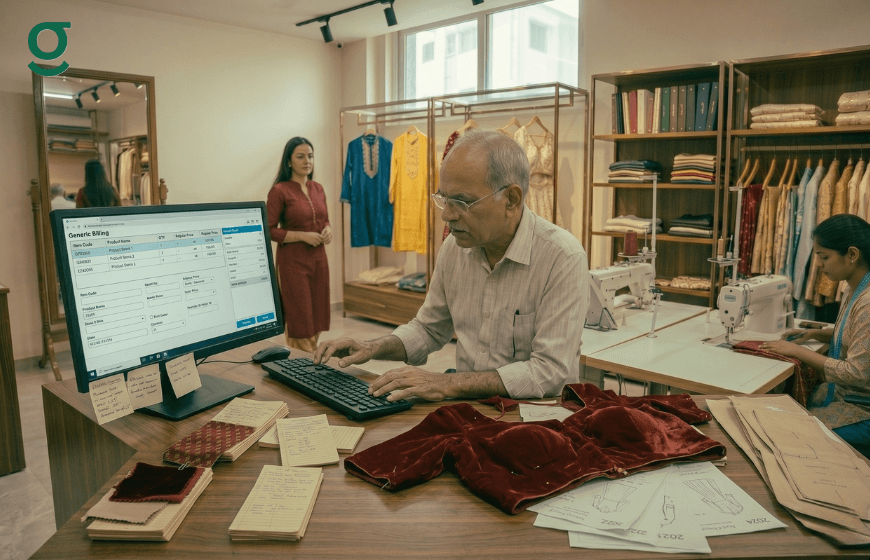
When a repeat client arrives for a new order and the Masterji says, 'Your waist from last season was 30 inches. Would you like us to confirm that before we begin?', the effect on the client relationship is significant. The client understands that the boutique is paying close attention to their fit. They trust the garment will be right.
This attention to detail is only possible when the tailoring measurement book stores a history of entries with dates, not just a single record. GrowStitch provides this as a built-in feature of every client profile. The boutique does not need to create a separate tracking system or add notes manually.
How measurement data contributes to better business decisions across the boutique: Optimize Stock Decisions with a Tailor Measurements App.
The Practical Workflow for Tracking Body Changes in Your Tailoring Measurement Book
Before the appointment, pull the client's measurement profile in GrowStitch. Review the date of the last entry and note the key dimensions on record. At the start of the appointment, ask the client directly: 'Have there been any significant body changes since your last visit with us?' If the client says yes, take fresh measurements and save the new entry. If the client confirms no significant change, confirm the existing measurements and mark them as valid for the current order.
This workflow takes under two minutes and eliminates the most common source of repeat order fitting failure. It also positions the boutique as a professional partner in the client's personal fit journey, not just a stitching service.
How Measurement History Improves Over Time
A tailoring measurement book with two or three years of data for regular clients becomes a genuinely valuable business asset. Seasonal patterns begin to emerge. Clients ordering for Diwali sometimes show different measurements than at Eid if their fitness routine changes seasonally. Bridal clients often have different dimensions at the booking appointment compared to the final fitting six months later. Knowing these patterns helps the Masterji make better decisions about ease allowances and construction before cutting begins.
GrowStitch stores this history automatically. There is no additional effort required to build a measurement timeline for each client. Every new order that updates the measurement record adds to the boutique's understanding of that client's body over time.
How boutiques use data from tailor measurements apps to predict trends and plan better: Predict Sizing Trends Using Tailoring Software.
![][image1]
Conclusion:Why Repeat Client Measurement Tracking Is a Revenue Protection Strategy
Every alteration on a repeat order that was caused by using outdated measurements from the tailoring measurement book has a cost. The Karigar's time, the fabric used for adjustment, the delay in delivery and the damage to the client relationship all represent losses. A boutique that tracks measurement history correctly avoids these costs almost entirely.
Beyond cost savings, the boutique that knows its clients' measurement history is harder to lose to a competitor. When a client knows that the boutique has their complete fitting history, they are less likely to try a new boutique for their next order. That historical measurement data, stored correctly in the tailoring measurement book, is a retention asset.
Ready to run your boutique like a Pro? Download GrowStitch today: Download GrowStitch
Frequently Asked Questions
What is a tailoring measurement book used for?
A tailoring measurement book stores client body dimensions for custom garment stitching. When used well, it also tracks measurement changes over time for repeat clients, ensuring each new order is cut to the client's current dimensions. GrowStitch provides a digital tailoring measurement book with date-stamped history for every client profile.
How often should a tailoring measurement book be updated for repeat clients?
Measurements should be confirmed or updated at every new order appointment for clients who have not visited in six months or more. For bridal or high-value orders, fresh measurements are always recommended regardless of visit frequency. GrowStitch flags outdated measurement records and prompts Masterjis to review them before new orders begin.
Can a tailoring measurement book track body changes over time?
Yes, but only if the system stores date-stamped entries for each visit rather than a single measurement snapshot. A paper tailoring measurement book rarely achieves this reliably. GrowStitch stores full measurement history with date stamps, making body change tracking automatic and accurate for every repeat client.
What happens when a repeat client's body has changed since the last order?
When a repeat client's body has changed, the Masterji must take fresh measurements before beginning the new order. Using outdated figures from the boutique measurement book leads to poor fit, alteration costs and delivery delays. GrowStitch flags older measurement entries and prompts re-measurement so this decision is never left to chance.
How is GrowStitch different from a paper tailoring measurement book?
GrowStitch stores measurement history with date stamps for every client, allows side-by-side comparison of old and new entries and prompts the Masterji to confirm measurements at new appointments. A paper tailoring measurement book stores only static records with no dates, no comparison capability and no connection to the order workflow.
Why is measurement history a business asset for a boutique?
Measurement history stored in a tailoring measurement book over time reveals seasonal patterns, helps Masterjis anticipate body change trends and reduces alteration costs on repeat orders. Clients who know their boutique holds their complete fitting history are also less likely to switch providers, making measurement data a direct client retention tool.