How does tailoring software enable data-driven decisions?
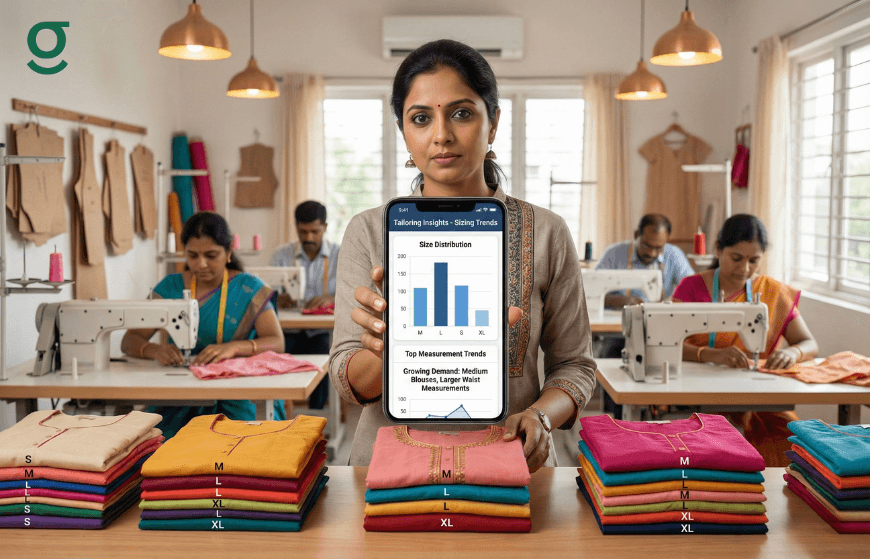
Using tailoring software moves a boutique beyond simple order management into the realm of data analytics. By digitizing customer measurements and order histories, businesses can identify recurring sizing patterns and preference shifts. Boutique software like GrowStitch aggregates this data, allowing owners to predict demand, optimize fabric inventory, and tailor their future collections to the actual physical profiles of their customer base rather than generic market assumptions.

How to Analyze Historical Measurement Data with GrowStitch
The most reliable predictor of future demand is past behavior. In a manual setup, measurement books are static; they store data but do not analyze it. GrowStitch changes this by creating a searchable, digital archive of every customer's body measurements.
By utilizing this tailoring software, boutique owners can:
- Identify Core Customer Profiles: Determine which size ranges (e.g., specific bust or waist measurements) constitute the majority of the client base.
- Track Changes Over Time: Monitor if the average customer profile is shifting. For example, a boutique might notice an increase in orders requiring larger allowances or specific fit adjustments.
- Reduce Redundancy: Accessing historical data instantly allows for comparison without re-measuring, highlighting long-term fit consistency or changes for loyal clients.
Identifying Regional Trends with GrowStitch Market Insights
Understanding what is happening inside the boutique is crucial, but understanding the local market provides a competitive edge. GrowStitch includes a "Growth Insight" feature that offers a view into regional dynamics.
This feature helps boutiques by:
- Benchmarking Performance: Showing the business's rank against competitors in the same city or pincode.
- Spotting Popular Products: Listing the top three selling products in the area. While this directly highlights design trends, it indirectly informs sizing strategiesif a specific type of blouse or kurta is trending locally, the boutique can prepare the necessary standard blocks or patterns for that category.
- Contextualizing Data: Helping owners understand if a dip or rise in specific order types is an internal issue or a wider regional trend.
Why Standardize Measurements for Accurate Data Collection?
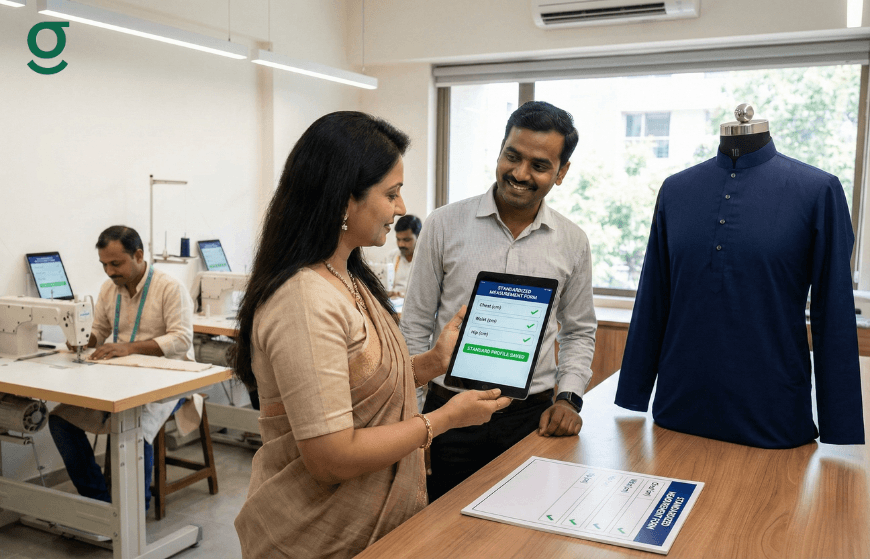
Data is only useful if it is consistent. A common issue in tailoring is the lack of standardization one master might measure "sleeve length" from the shoulder, while another measures from the neck. Tailoring software enforces uniformity.
GrowStitch aids in standardization by:
- Admin-Controlled Fields: The Store Manager or Admin configures the measurement fields. This ensures that every staff member collects data for the exact same parameters (e.g., shoulder, chest, waist, hip).
- Customization: Admins can add custom fields or drag-and-drop measurement parameters to suit specific garment types, ensuring that the data collected is relevant to the boutique's specific niche.
- Eliminating Ambiguity: Digital entry removes handwriting errors and interpretation differences, creating a clean dataset that can be reliably used for future sizing predictions.
Forecasting Fabric Requirements Using Tailoring Software
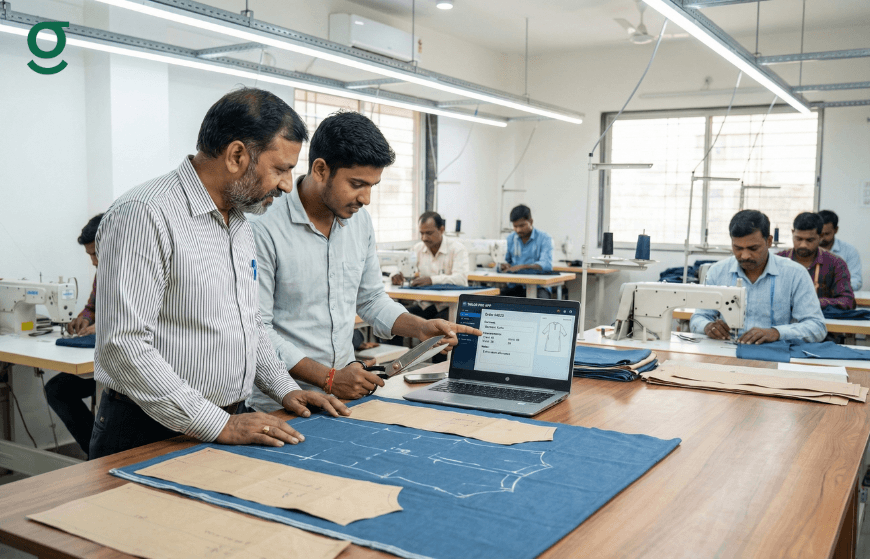
One of the direct financial benefits of predicting sizing trends is better inventory management. Fabric wastage is a major cost in custom tailoring. By understanding sizing trends through tailoring software, businesses can forecast fabric needs more accurately.
- Optimized Procurement: If data shows that 70% of orders fall within a specific size range, the boutique can purchase fabric widths and lengths that minimize off-cuts for those dimensions.
- Lining and Trims: Accurate historical data helps predict the consumption of auxiliary materials like linings, buttons, and zippers, preventing last-minute shortages.
- Cost Estimation: With precise measurement data linked to previous orders, the software helps in calculating exact material usage for similar future orders, ensuring accurate pricing and profit margin protection.
Planning Collections with GrowStitch Business Intelligence
For boutiques that create ready-to-wear collections alongside custom stitching, data is invaluable. GrowStitch's "Business Insight" feature provides the metrics needed to plan successful launches.
- Sales Velocity: By viewing sales data for "Today," "Last 7 Days," or "This Month," owners can identify which categories are moving fastest.
- Average Order Value (AOV): Understanding the AOV helps in pricing future collections. If the data shows a high AOV, the boutique can confidently introduce premium fabrics or intricate designs.
- Target-Based Planning: Setting store targets within the app and tracking progress helps align production schedules with financial goals, ensuring that the workshop is focused on high-demand items during peak seasons.
Conclusion
Transitioning to tailoring software is about more than just going paperless; it is about unlocking the value hidden in customer data. GrowStitch enables this transformation by standardizing measurements, providing market context, and offering clear business insights. By leveraging these tools, boutique owners can predict sizing trends, optimize their inventory, and build collections that truly resonate with their market.
And if you move now, the first 1,000 users get exclusive early-bird access, download the app today and stay ahead while others struggle to catch up
Frequently Asked Questions
1. How does tailoring software help in predicting sizing trends?
Tailoring software aggregates historical measurement data, allowing owners to identify which size ranges and fit preferences are most common among their customers.
2. Can GrowStitch show me what is trending in my area?
Yes. The "Growth Insight" feature displays the top selling products and your business ranking within your specific city or pincode.
3. Is it possible to customize the measurement fields in GrowStitch?
Yes. The admin can configure, add, or rearrange measurement fields to ensure that the team collects consistent and relevant data for every order.
4. How does standardized data help with fabric purchasing?
Consistent measurement data allows you to calculate the average fabric consumption per order type, helping you buy the right amount of material and reduce wastage.
5. What kind of business insights does GrowStitch provide?
GrowStitch offers insights into sales performance, Average Order Value (AOV), and progress against store targets for various timeframes (daily, weekly, monthly).
6. Can I see my competitors' data on the app?
No, you cannot see specific data of other boutiques. However, "Growth Insight" provides an aggregated view of market trends and your relative ranking to help you benchmark performance.