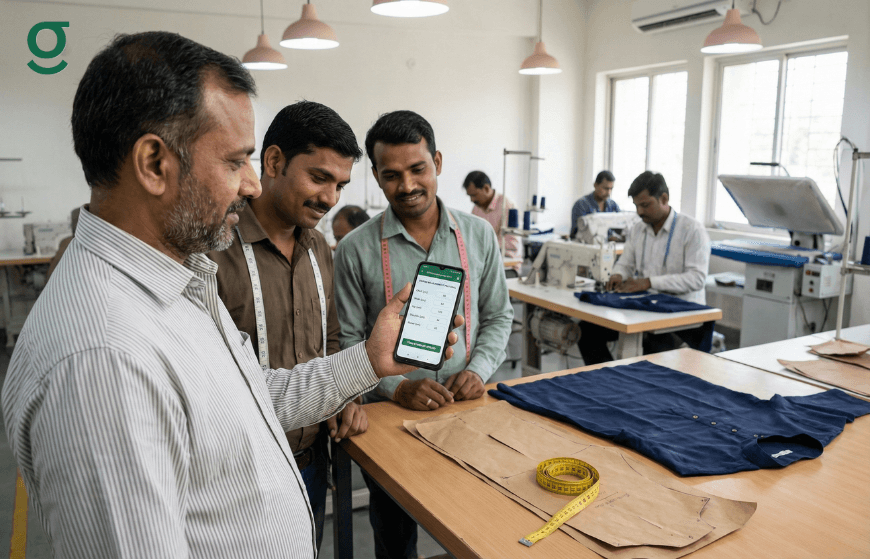
What is standardized measurement in a tailoring application?
Standardized measurement within a tailoring application refers to the use of a unified, digital framework for recording customer body dimensions. Instead of relying on varied personal shorthands or unstructured diary notes, the boutique app enforces a consistent set of data fields (like "Cross Back," "Armhole," "Bust Point") that every staff member must follow. This ensures that whether a senior master or a junior assistant takes the measurements, the data remains accurate, legible, and universally understood by the production team, leading to consistent fitting results.
The Shift from Diaries to Digital: Standardizing Data in a Fast-Paced Boutique
The traditional method of recording measurements involves a physical diary and a pen. While familiar, this manual process is inherently flawed for growing businesses.
- Varied Formats: One tailor might write "SL" for sleeve length, while another writes "Slv Lngth." These inconsistencies slow down anyone else trying to read the file.
- Illegible Handwriting: Rushed scribbles during peak hours often lead to misinterpretation — confusing a "2" for a "7" can ruin a garment.
- Data Fragmentation: Measurement books often get filled and replaced. Retrieving a customer's data from a book used six months ago is a time-consuming manual search.
A tailoring application digitizes this entire process. It replaces the blank page with a structured form. Every measurement has a specific box, ensuring that data is recorded in the same format every single time. This digital shift transforms measurements with Growstitch from temporary notes into a permanent, organized business asset.
Unified Measurement Protocols: Creating a Consistent Language for Your Production Team

A major challenge in tailoring units is the communication gap between the person taking the measurement (front-end) and the person cutting the fabric (back-end).
How a Tailor App Bridges the Gap:
- Defined Terminology: The app uses standard terms for every dimension. There is no ambiguity about where a measurement starts or ends because the field names are fixed.
- Mandatory Fields: You can configure the tailoring application to require specific fields for specific garment types. For a blouse, "Front Neck Depth" might be mandatory, preventing the staff from forgetting it.
By establishing this "consistent language," the application ensures that the cutter understands exactly what the measurer intended, regardless of who took the order.
Eliminating the "Silent Loss": How Standardized Records Prevent Rework and Fabric Waste
"Silent loss" in a boutique refers to the money lost on alterations and ruined fabric due to avoidable errors. These costs are often unrecorded but eat significantly into profits.
- Reduction in Alterations: When measurements are standardized and legible, the "first-time fit" rate improves dramatically. This reduces the labor hours spent on unpicking and restitching garments.
- Fabric Conservation: A cutting mistake due to a misread number often means replacing expensive fabric at the boutique's expense. Digital records eliminate legibility errors.
- Accountability: If a fit issue arises, the tailor app allows you to trace exactly what measurements were entered and by whom, helping you identify if the error was in the data entry or the drafting stage.
Standardization acts as a quality control checkpoint, catching errors before scissors touch the fabric.
Scaling Your Brand: Maintaining Measurement Quality Across Multiple Store Locations
For boutique owners expanding to a second branch or a franchise model, consistency is the biggest hurdle. A customer visiting Branch A expects the same fit as they got at Branch B.
The Role of a Boutique App in Scaling:
- Centralized Database: Customer profiles are stored in the cloud. A customer can walk into any of your branches, and the staff can pull up their standardized measurements instantly.
- Training Simplicity: When you hire new staff, you train them on the app's workflow. They don't need to learn a specific master's "shorthand" style; they just need to follow the fields on the screen.
- Remote Monitoring: As an owner, you can audit measurement files from anywhere. With Growstitch You can see if staff are skipping optional fields or if specific branches have higher alteration rates.
A tailoring application provides the digital infrastructure needed to replicate your quality standards across multiple locations without you needing to be physically present everywhere.
Standardization as a Sales Strategy: Building Customer Trust Through Perfect Fits
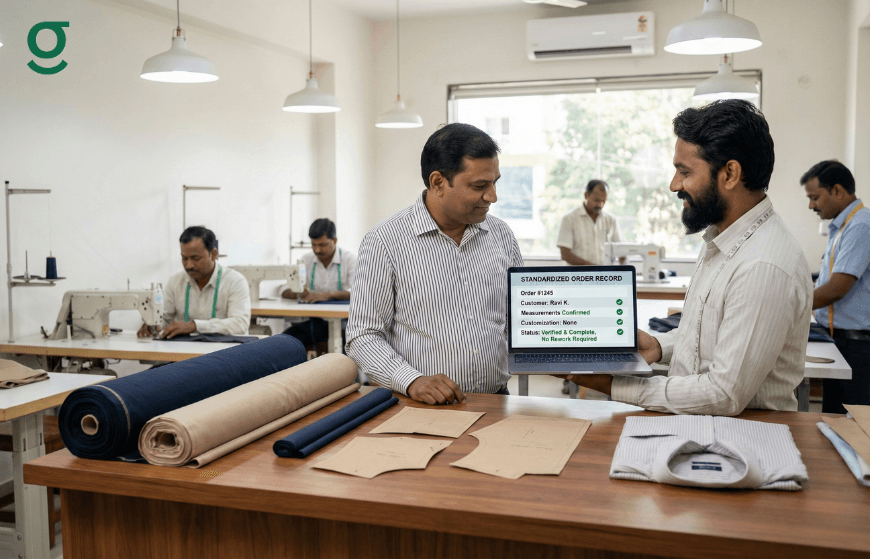
Ultimately, customers return to a boutique for one reason: they trust the fit. Growstitch Standardized measurements are a backend process that delivers a powerful frontend result.
- Confidence in the Process: When a customer sees their measurements being entered into a professional app, it signals that the business is organized and modern.
- Convenience for Repeats: The ability to say, "We have your measurements on file, ma'am," is a huge convenience factor.
- Reduced Anxiety: For bridal or expensive ceremonial wear, customers are anxious about the outcome. A structured, digital measurement process reassures them that their expensive fabric is in safe, professional hands.
By using a tailor app to standardize this critical step, you turn a routine operational task into a trust-building asset that differentiates your brand in a crowded market.
Conclusion
Standardizing measurements is not just about tidying up your records; it is about operational maturity. Moving from manual diaries to a tailoring application eliminates ambiguity, reduces costly errors, and lays the foundation for scalable growth. GrowStitch enables this transition by offering a platform where data is structured, accessible, and secure, ensuring that your business delivers the same high-quality fit to every customer, every time.
And if you move now, the first 1,000 users get exclusive early-bird access, download the app today and stay ahead while others struggle to catch up
Frequently Asked Questions
1. How does a tailoring application improve measurement accuracy?
It provides a structured format with specific fields for each required dimension. This eliminates handwriting errors, ensures no measurements are skipped, and standardizes the terminology used by all staff.
2. Can I use the app for different types of garments?
Yes. You can create measurement profiles for various garment types (e.g., Blouse, Kurti, Pants) within the tailor app, ensuring you capture the right data for each specific item.
3. Is it difficult for older masters to learn the app?
GrowStitch is designed to be user-friendly. The interface uses clear labels and a simple flow, making it easy for staff of all technical skill levels to adopt digital measurement entry.
4. Can I access customer measurements from different locations?
Yes. Since the tailoring application is cloud-based, you can securely access customer profiles and measurements from any device, whether you are at the store, at a production unit, or at home.
5. Does the app help reduce fabric waste?
Indirectly, yes. By ensuring measurements are legible and accurate before cutting begins, the app significantly reduces the risk of cutting errors that lead to wasted fabric and costly rework.
6. Can I save multiple measurement profiles for one customer?
Yes. You can save distinct profiles for the same customer (e.g., "Regular Fit" vs. "Saree Blouse Fit") or update profiles over time as their measurements change, keeping a complete history.