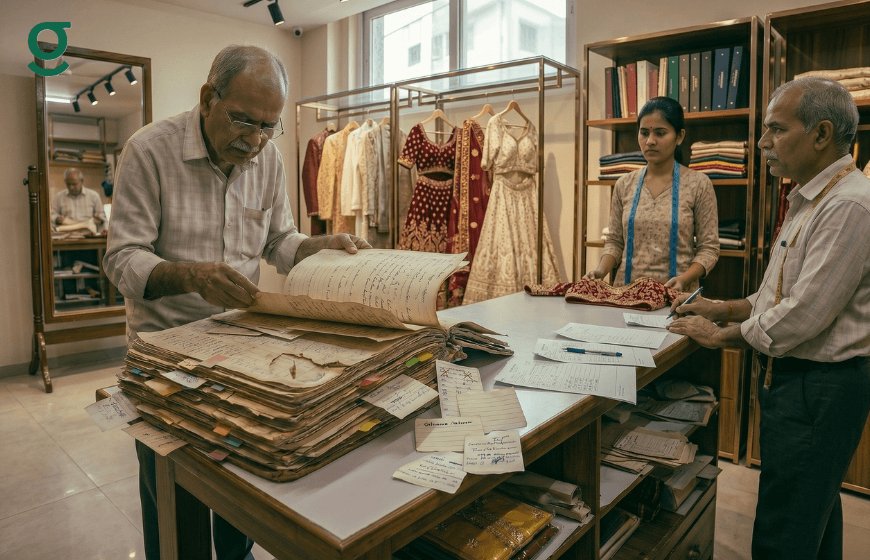
A boutique measurement book is a record system used by tailoring businesses to store client body dimensions for custom garment production. It captures the key measurements a Masterji takes during the client intake appointment: chest, waist, hip, shoulder, sleeve length, garment length and any garment-specific dimensions required for blouses, lehengas, sherwanis or Anarkalis. Every boutique that handles custom stitching relies on a boutique measurement book in some form.
For decades, the boutique measurement book meant a physical register. Measurements were written by hand at the counter, organised by customer name and referred to whenever a new order was placed. This system worked when boutiques had twenty active clients. It starts failing at fifty. By one hundred clients, a paper boutique measurement book becomes a liability. This guide explains what a boutique measurement book must do and why the digital version is the standard any serious tailoring business should adopt.

What a Boutique Measurement Book Must Capture
A complete boutique measurement book covers every dimension required for the garment types the boutique offers. For womenswear, the minimum fields are bust, underbust, waist, hip, shoulder width, sleeve length, neckline depth, kurta length and salwar length. For a lehenga blouse, the boutique measurement book adds underbust depth, back depth, neck-to-waist length and blouse side. A woman tailor measurement book for a full bridal set may contain fifteen or more distinct dimensions for a single client.
For menswear, the boutique measurement book records chest, waist, seat, shoulder, collar size, sleeve length, shirt length, trouser length, knee circumference and rise. In a Karigar-led workshop handling Jodhpuri suits, accurate measurements in every one of these fields determines whether the garment fits or fails at the first fitting.
See how measurement accuracy directly affects rework and alteration costs: How a Tailor Measurements App Helps Boutiques Cut Rework Costs.
Why Tailors Use a Physical Boutique Measurement Book
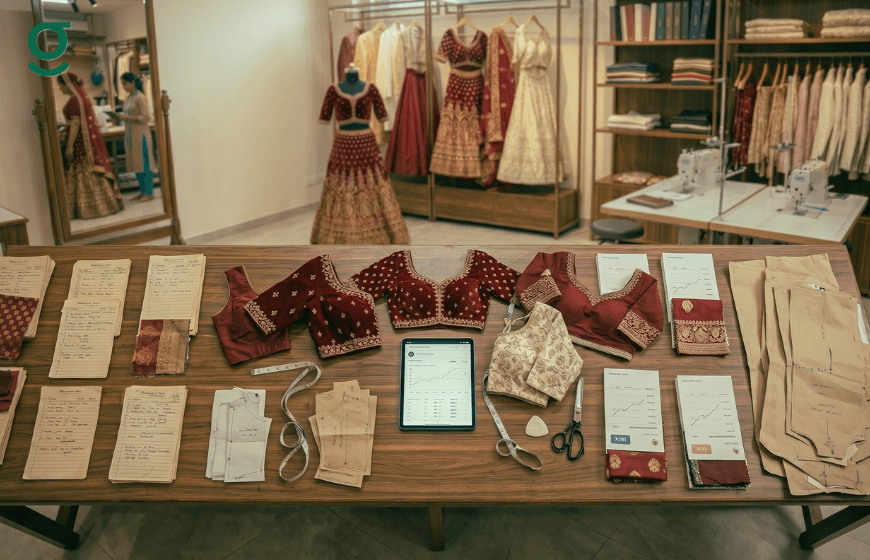
The physical boutique measurement book became standard practice because it was the only available option. A hardbound register, organised alphabetically or chronologically, gave the Masterji a portable reference they could carry to the cutting table. The system worked when the boutique had one Masterji, one location and a small recurring client base.
The appeal of the physical boutique measurement book was also its simplicity. No software, no phone, no learning curve. The Masterji picks up a tape, calls out the dimensions and a colleague or the owner writes them in. The measurement card belongs to that customer and stays in the register.
Why Paper Boutique Measurement Books Create Serious Risks
Handwriting Errors That Reach the Cutting Table
A boutique measurement book filled in by hand under counter pressure produces errors. A 34 written in a rush is read as 84 by the cutter. A bust measurement recorded on the wrong customer's page creates a garment that fits the wrong person. These errors are invisible until the fitting session, by which point the fabric is cut and recovery requires either alteration or recutting. Both cost money and delay delivery.
No Backup When the Register Is Damaged or Lost
A physical boutique measurement book is irreplaceable if it is lost, damaged or stolen. Boutiques have lost years of measurement history to fires, floods, water damage and staff taking the register home accidentally. When a repeat client returns after eighteen months expecting the boutique to have their measurements on file, a lost register means starting the measurement process from scratch.
Impossible to Search Quickly
Finding a specific customer's record in a physical boutique measurement book means flipping through pages. For a boutique with one hundred or more clients, this takes two to five minutes under the best conditions. When the client is standing at the counter and the Masterji is managing three other customers simultaneously, five minutes is too long.
No Connection to Orders or Production
A paper boutique measurement book is disconnected from the order record and the billing system. The Masterji takes measurements, records them in the book and then must separately communicate them to the cutter, either verbally or by showing the register. The measurement card has no link to the order timeline, the production stage or the billing record. Every handoff between the measurement book and the rest of the workflow is an opportunity for error.
What a Digital Boutique Measurement Book Does Differently
A digital boutique measurement book solves every limitation of the paper system. Measurements are entered once and stored permanently against the customer's profile. The record is searchable by name, phone number or order reference. There is no page to flip through. The Masterji pulls the customer's measurement card in seconds.
GrowStitch provides a structured digital boutique measurement book with garment-specific measurement templates. When a blouse order is created, the blouse measurement template appears. When a sherwani order is created, the sherwani template appears. The Masterji fills in only the relevant fields, reducing missed dimensions and ensuring consistency across all measurement intakes.
How to build a complete digital measurement database for your boutique: How to Build a Centralised Measurement Database Using a Tailor Measurements App.
The Woman Tailor Measurement Book: Specific Requirements
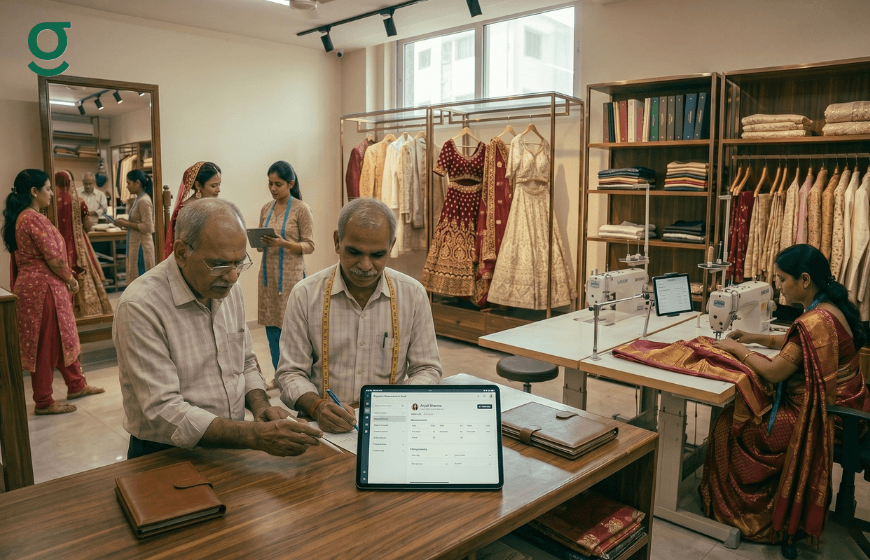
A woman tailor measurement book carries greater complexity than a general measurement record. Blouse measurements alone require eight to ten distinct fields depending on the neckline and sleeve design. A lehenga set involves the lehenga waist, hip, flare circumference, hem length and the blouse measurements as a separate set. A boutique handling bridal orders with multiple outfit changes must maintain a separate woman tailor measurement book entry for each garment type.
GrowStitch supports garment-specific templates for womenswear categories including blouse, lehenga, salwar kameez, Anarkali, kurta and churidar. Each template surfaces only the fields relevant to that garment, making the intake process faster and more accurate for Masterjis who specialise in womenswear.
Why designer boutiques are moving away from the physical woman tailor measurement book: Why Top Designers Are Rejecting the Physical Boutique Measurement Book.
How a Digital Boutique Measurement Book Scales With Your Business
A physical boutique measurement book works for a single-location boutique with one Masterji. The moment the boutique adds a second fitting room, a second Masterji or a second branch, the physical register becomes the bottleneck. Only one person can hold it at a time. The Masterji at counter two cannot access the measurement record that is sitting at counter one.
A digital boutique measurement book on GrowStitch is accessible from any device at any time. The senior Masterji reviewing a complex bridal order from home can check the measurement card without needing the physical register. The Karigar at the cutting table can see the exact measurement card the Masterji filled in at intake without a separate communication step.
Syncing measurement data across your team eliminates the handoff errors that cause most fitting failures: Sync Team Measurements with a Tailor Measurements App.
Protecting Customer Measurement Data Long Term
A boutique's measurement data is one of its most valuable assets. A client who has been coming to the boutique for three years has their measurements, preferences and order history stored in the boutique measurement book. That history makes repeat orders faster, more accurate and more personalised. If that data is in a physical register, it is at risk every day.
GrowStitch stores measurement data digitally with secure access controls. The data does not leave the platform when a staff member leaves and is not at risk from physical damage to the boutique. The boutique measurement book grows over time into a permanent, searchable client database.
How tailoring software protects customer measurement history: Protect Customer Measurement History with Tailoring Software.
Conclusion: Starting Your Transition to a Digital Boutique Measurement Book
The transition from a paper boutique measurement book to GrowStitch starts with the next new customer. Enter their measurements directly into GrowStitch rather than the register. For returning clients, add their digital measurement profile on their next visit. There is no need to transcribe all historical records immediately.
Within six to eight weeks, the active client base has digital measurement cards. The physical register can be retired as a reference document. From that point forward, every measurement is stored, searchable and accessible to the full team without the risks that come with a paper boutique measurement book.
Ready to run your boutique like a Pro? Download GrowStitch today: Download GrowStitch
Frequently Asked Questions
What is a boutique measurement book?
A boutique measurement book is a record system used by tailoring businesses to store client body dimensions for custom garment stitching. It captures measurements like chest, waist, hip, shoulder, sleeve and garment-specific dimensions for each client. It can be a physical register or a digital profile managed through a tailor measurements app like GrowStitch.
Why is a digital boutique measurement book better than a paper register?
A digital boutique measurement book stores measurements permanently against a customer profile, is searchable instantly and eliminates handwriting errors. Paper registers can be lost, misread and are not connected to order records or billing. A digital tailor measurements app like GrowStitch links measurements directly to orders and production workflows.
What does a woman tailor measurement book include?
A woman tailor measurement book includes bust, underbust, waist, hip, shoulder width, sleeve length, neckline depth, garment length and garment-specific fields for blouses, lehengas, Anarkalis and salwar kameez. GrowStitch provides separate measurement templates for each garment category so the Masterji captures only the relevant dimensions.
Can GrowStitch replace a physical boutique measurement book?
Yes. GrowStitch provides a complete digital boutique measurement book with garment-specific templates, customer profiles and measurement history. It replaces the physical register entirely and connects measurement data directly to orders, production tracking and billing, eliminating the disconnected handoffs that create fitting errors.
What happens if a boutique measurement book is lost or damaged?
A lost or damaged physical boutique measurement book means permanent loss of all stored client measurement history. Repeat clients must be re-measured from scratch, which is inconvenient and damages trust. GrowStitch stores all measurement data digitally, protecting the boutique's measurement history from physical damage, loss or staff changes.
How do I transition from a paper measurement book to GrowStitch?
Start by entering your next new client's measurements directly into GrowStitch. Add digital profiles for returning clients on their next visit. Within six to eight weeks, your active client base has digital measurement cards. There is no need to transcribe all historical records before beginning the transition.